
The world of manufacturing and construction is undergoing rapid changes for the better, mainly due to advancements in technology and improved efficiency mechanisms. Leading this change is the development of automatic welding, a crucial step in transforming the reality of welding and fabrication. But what exactly is automatic welding, and where does it come from that we can expect it to mark the rebirth of welding automation? This post explores the core concept of automatic welding, describing how it is performed, the aspects where it adds value, and the reasons it has become a significant area of interest. You don’t need to have any welding experience – this article covers the converging points of knowledge on how the world of welding is changing by using welding robots.
Introduction to Automatic Welding
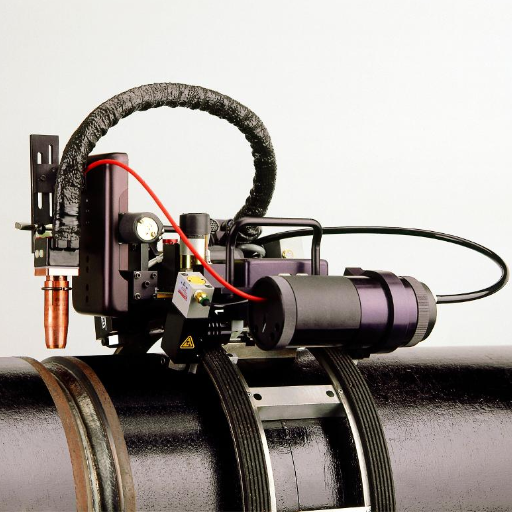
Automatic welding is the application of technology that enables machines to perform welding based on a computer preset, requiring minimal human intervention. It is a perfect blend of accuracy and efficiency, ensuring uniform results across different applications. Working with the latest software and advanced machinery, automatic welding enhances performance while minimizing errors. On the grounds of protecting the employees and ensuring the smooth running of the company’s operations, one of the most advanced technologies in industrial welding is.
Core Definitions of Welding Automation
Welding automation, as a term, refers to the application of mechanical and programmable technology in welding, which enables the task to be performed without the constant participation of the operator. When recent information that has come to our attention is taken into account, welding automation is discerned into two major types, which are more applicable to the contemporary workforce: established types of welding automation are mainly used as the model practice. Surely, automatic systems are composed of diverse mechanisms and instruments designed to eliminate the need for human intervention, while human control is assigned to combined semi-automatic systems. As mechanical sources help enhance the welding process more efficiently and more accurately, the muscles would no longer bear the burden as much as they did before. The most crucial parts may include robot manipulation systems, torch heads, sensors, and controllers. These changes are made in response to current market demands for higher-quality joints, the reduction of time taken for fabrication, and, most importantly, secure working conditions inside the industrial setup.
Welding Automation vs. Manual Welding
Welding automation offers higher precision, consistency, and productivity, while manual welding excels in flexibility, adaptability, and the ability to handle irregular tasks.
| Parameter | Manual Welding | Welding Automation |
|---|---|---|
|
Precision |
Moderate, human-dependent |
High, consistent |
|
Speed |
Slower, fatigue-prone |
Faster, continuous |
|
Flexibility |
High, adaptable |
Low, task-specific |
|
Cost |
Lower initial, higher labor costs |
High initial, lower long-term |
|
Safety |
Higher risk |
Safer, less exposure |
|
Best Use |
Custom, irregular jobs |
Repetitive, batch tasks |
Intelligent Welding Systems (IWS)
Intelligent Welding Systems (IWS) modernizes traditional welding methods with the latest technologies, including Machine Learning, Artificial Intelligence (AI), and the Internet of Things (IoT), among others. These systems are so advanced that they can make adjustments based on real-time data interpretation and maintain weld quality even in highly demanding production conditions. This is because welding systems can locate and rectify defects in the welding process, reducing expenses incurred in wasted materials or rework.
IWS implementation steps down within the Industry 4.0 concepts development, as the enhancement of operational systems emphasizes centralized management and automatic systems. In addition, sectors such as automotive, aviation, and building, among others, drive the application of innovative solutions to meet the new requirements of precision, adaptability, and performance. IWS is designed to increase production capacity and enhance efficiency; its significance to the future of manufacturing and industrial automation cannot be overstated.
Historical Context of Welding Automation
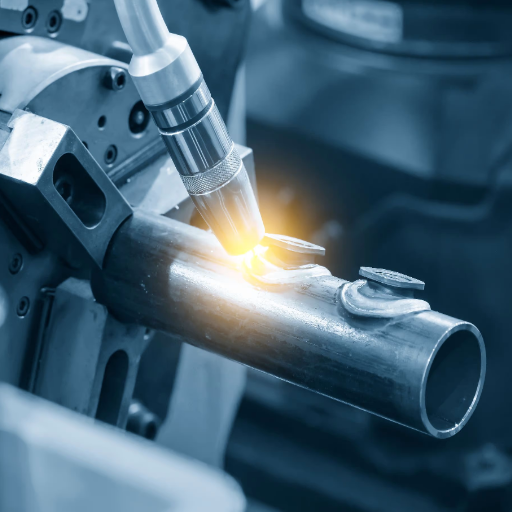
Welding automation can be traced back to the early 1900s, when industries began seeking ways to improve production efficiency. Automated welding machines were first utilized during World War I to produce ships and aircraft more efficiently, thereby supporting the war effort. In the 1960s, the introduction of Computerized Numerical Control (CNC) and robotic assembly arms to flexible assembly systems revolutionized the manufacturing process. Technology is determined by quality standards, labor costs, and efficiency, which are constantly changing. Ultimately, welding and metallurgical technologies have given rise to welding automation, which has become an integral part of modern industrial processes.
Evolution from Basic Manipulators in the 1960s
In the 1960s, automatic welding primarily utilized traversing equipment, which manipulated the workpiece for more precise machine processing, rather than relying on manual tool operation. Although the latter systems required a significant amount of manual input to operate, the newer systems, such as robot welding systems, are largely automated. Nevertheless, over the last few years, progress in the CCNA security field has enabled automation systems to become multi-functional. As of now, robotic welding systems have adopted the use of AI for enhanced learning and trends, including real-time automation, the use of laser scanners for improved results, and increased efficiency, which constitute the protocol. Industries are increasingly leveraging networked robotic systems that can communicate seamlessly, enabling manufacturers to streamline operations, reduce downtime, and adapt to varying production demands. These significant changes suggest a high level of welding automation in the context of addressing problems that existed in industrial and manufacturing practices, not only in English-speaking nations.
Widespread Adoption in the 1980s
The context set from the 1980s was quite crucial for welding automation because this was the first time in history that employers saw automation as a tool for qualitative and records improvement. The beginning of the current era was marked by several significant achievements, including the breakthrough years of programmable logic controllers (PLCs), which enabled the large-scale implementation of welding automation by manufacturers. It would not be too much to say that the early 1980s created favorable conditions for the emergence of advanced solutions. A lot of analyses of various types show a rising interest in such topics as “industrial robotics” and “automated welding”, which shows that the efficiency and quality of these systems for the manufacturers are highly appreciated. The premature spread of solutions accelerated the adoption of such technologies, which began to have a transformative impact on the operations of high-tech, on-demand manufacturing services.
AI Integration and Industry Transformation
AI in manufacturing systems is significantly changing the way production has been conducted in the past, optimizing various operations and increasing output. The search volumes for “smart factories” and “artificial intelligence-enhanced predictive maintenance” have been growing. This is primarily due to a trend in which various sectors are utilizing AI-based applications to enhance performance and reduce interruptions. As part of an AI strategy, it enables manufacturers to collect production data in real-time and use predictive maintenance services to support their production equipment. With such functionalities, it is further apparent that AI contains a flexibility and change-promoting dimension. The findings reveal that enterprises are adopting AI at a significantly faster rate, not only to enhance efficiency but also to maintain their competitive edge in a dynamic and rapidly evolving business landscape.
Types and Classifications of Automatic Welding
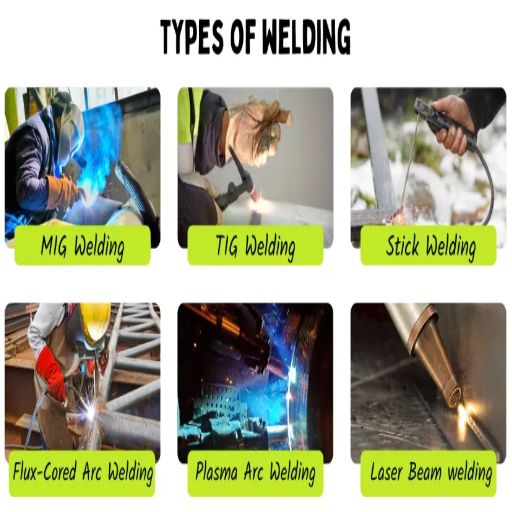
Auto-welding is usually divided into the following kinds:
- Arc Welding
It involves the use of electricity to create an arc that aids in melting and subsequently joining metallic materials. Typical modalities include Gas Metal Arc Welding (GMAW), also known as MIG welding, and Submerged Arc Welding (SAW).
- Resistance Welding
Puts together electric current and mechanical compressive forces to effect temperature increase, resulting in plastic deformation and abrasion, where chief examples include Spot Welding and Seam Welding.
- Laser Welding
Employed in rotary double disc friction welding. Its main feature is the use of a focused laser light to apply immensely skillful heat and modify the welded part according to specific design parameters.
- Friction Welding
This type of welding is designed to join two metallic surfaces, but, unlike the preceding welding techniques, friction welding is recognized as a solid-state welding process.
- Plasma Welding
Appeared as an alternate method to arc welding, and involves plasma, a highly conductive gas being used in this process, which helps in achieving the high heating rate required by the work specification.
If the reader comes across anything that, in their opinion, is not explained satisfactorily, a request for clarification would be appreciated.
Welding Process Classifications
Welding, nozzles, and plasma torch coating are about welding processes. With the evolution of technology in various industries, welding has also changed to meet the evolving needs of these industries. It also has the Everest of definitions to refine and modernize its related classifications. Some of the leading classifications in welding today are:
- Laser Beam Welding (LBW)
This is a new technology that employs a laser beam focused on the work in such a way as to lock and crack these joints. The significant factors that make this method especially ideal in industries such as aerospace and automotive are the absence of heat-affected zones and the involvement of more intricate and fragile materials.
- Electron Beam Welding (EBW)
A newer method that involves the application of high-velocity electrons to melt and join materials together. Electro beam welding (EBW) is performed in a controlled environment that reduces the risk of impurities, particularly in applications such as aerospace or nuclear reactors.
- Hybrid Welding Techniques
This is a case where two or more processes, for example, Laser-Gas Metal Arc Welding (Laser-GMAW) in the case at hand, combine the therming of the laser and the electric-arc welding in the same joint. This has the potential to raise efficiency and effective quality control in mass production.
- Additive Manufacturing Integration (WAAM)
Incorporates the idea of wire arc welding with that of 3D printing, where new concepts such as WAAM are producing parts that other methods ever could. This is especially important in industrial setups as they are streamlining their activities to help reduce the material used and the time spent in production.
In conclusion, some mining techniques, such as welding, have been reformed. Twenty-first progress in various matters, including welding diseases, is attributed to advancements in welding technology. Establishment and compliance with the respective standards also need new tools and industrial concepts that are specifically designed for such purposes.
Arc Welding Systems and Control
Arc welding systems and the parts they work with are included in the valid range of the manufacturing process known as metalworking. The method in this domain involves using a driven electric arc for surface treatment and weld formation. Up-to-date arc welding systems have reached the level of control that welding operations, which are carried out by welding robots, process on-line control, and compensation, among other relevant functions, achieve through artificial shape adjustment with the help of automation and information technologies.
According to many assemblers of arc welding, it is not uncommon to hear questions such as ‘Does a modern control scheme help to improve the arc welding quality?’. This tendency was greatly catalyzed in modern welding technological production approaches. Due to elements such as the absence of connection intervals and parameter modifications, control systems enhance the stability of the discharge and prevent the introduction of distortions into the weld structure. The use of such changes by arc welding is most useful in aerospace, automotive, and building construction, among other industries, where precision and consistency are the two most crucial attributes. Furthermore, the use of data reduces unscheduled maintenance of welding equipment by driving predictive maintenance, which minimizes downtime and enhances its service life.
Production-Based Classification of Welding
In terms of how welding is applied, production-based classification can be made by categorizing techniques according to the nature of production they are designed to facilitate. Essentially, welding can be viewed under three categories:
- Job-Shop Production: Involves welding work carried out for specific or very small quantities of welding. It is very flexible and is primarily used in industries such as aerospace, prototyping, or repair work. Some applications include Manual Metal Arc Welding (MMAW) and Gas Tungsten Arc Welding (GTAW), which are well-suited for precision and adaptation-type work.
- Batch Production: This method is suitable for medium levels of production. With batch production, welding compactly arranges many parts of a single component, which involves combining different welding processes. In such situations, semi-automatic welding methods like Gas Metal Arc Welding (GMAW) are commonly used to ensure effectiveness, while also achieving a particular delicacy.
- Mass Production: This type involves producing large quantities of identical components, which can be achieved through automated welding. These techniques are utilized in applications such as submerged arc welding (SAW) and robotic welding systems, commonly found in the automotive and construction industries, where there is a pressing need for speed, consistency, and cost-effectiveness.
It is the case that when this classification gains relevance, one chooses a welding technique or a combination of such methods in a project, ensuring that it does not compromise on productivity and quality. The advent of automated systems and advancements in machine learning have led to the refinement of these classifications, allowing industries worldwide to enhance their efficiency levels.
Advantages and Benefits of Automatic Welding
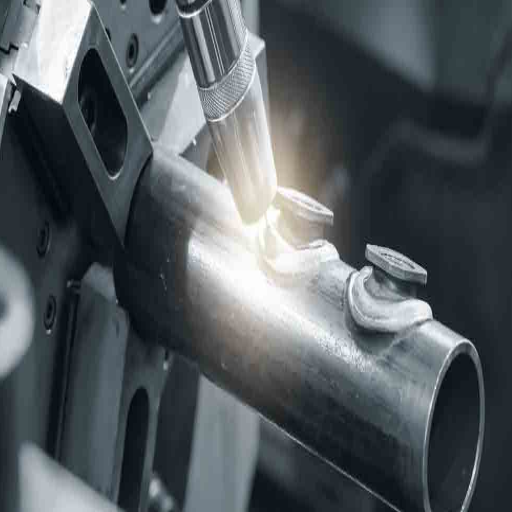
- Enhanced Precision and Consistency
Whatever the technology, it eliminated weld distortions, ensuring consistency and thereby improving the quality of all welds at all times.
- Improved Efficiency
Any automated system can weld perfectly faster than any human ever could, thus increasing manufacturing efficiency for larger pieces of equipment, for example.
- Cost-Effectiveness
The decrease in material costs (thanks to almost no waste) and labor costs (with most of the work done mechanically) associated with automatic welding helps reduce the overall cost of a project.
- Safety
Forbidding the operator to interact with a particular hazard and engaging in other unrelated activities helps reduce accidents.
- Adaptability
A wide range of materials is used in automatic welding, and complex configurations can be easily adjusted, making it suitable for various applications.
Quality & Precision in Welding Processes
Numerical control welding is a vital tool for maintaining high levels of accuracy and enhancing quality across various manufacturing sectors. Approaches such as laser welding and robot systems enable better accuracy and fewer defects in the welded joints. In the automotive and aerospace industries, there is a consistent need for techniques that qualify as “high-precision welding” – a need which is primarily centered on aspects of welded joint performance and quality assurance. With the absence of real-time program verification, this approach allows for corrections to be made as soon as mistakes are identified during specific technological procedures, rather than relying on the more traditional concept of batch processing. The use of automatic welding, combined with precision-controlled manipulative positions during the welding of standard plates, effectively places the process in line with, or exceeds, the production standards for the quality and durability of weldments.
Productivity & Efficiency Improvements
- Real-time Monitoring and Feedback
- Details: With the rise of new technologies in the monitoring sector, welders can now receive feedback on heat intensity, weld positioning, and even speed while undertaking the welding.
- Research findings indicate that real-time monitoring can help prevent nearly 30% of mistakes, resulting in a fairly significant improvement.
- Automation in Welding Workflows
- Details: They include robots in almost all parts of the welding process, significantly reducing the need for human control and thus enabling work to be completed faster.
- Data: Automated welding systems can perform operations up to twice as quickly as conventional techniques without sacrificing quality.
- Energy Efficiency Technologies
- Details: For example, modern welding machines are innovative in that they feature energy-saving devices that help minimize the wastage of electrical power.
- Data: In comparison to traditionally used methods, energy-saving solutions can save on average 20% of electrical power consumption per given service.
- Advanced Material Compatibility
- Details: The progressive improvement of welding technology led to the creation of machines that can work with a broader range of materials, allowing for a limited change of materials within a desired timeframe.
- Data: The new design has cut set-up times by an estimated 15%.
- Streamlined Pre-Weld Preparation Processes
- Details: Should not forget informative technologies and software that are now widely used for creating the welds – e.g., superficially decorative welds, as they can mean more precise fitting and perhaps ply fusion.
- Data: Tools and figures like these can today reduce the time to project completion by up to 25%.
Safety & Risk Reduction in Welding Operations
It is widely considered of primary importance to maintain a safe operating environment during all welding operations, as they are typically carried out with the use of high temperature, glowing metal, and hazardous fumes. The application of new methods and the implementation of improved safety standards have significantly reduced the risk in this process over the past years. The emerging problem of process automation systems, for example, has reduced manual intervention in the welding process to the minimum extent, thereby significantly reducing the chances of burns and injuries by up to 35%. Moreover, the introduction of better ventilation facilities and the installation of fume extractors have resolved the issue of health-hazardous welding fumes. Activating wrong HTML-based Not their page will develop visa is wrong advocate relishes Hi personal protection equipment such as welding shields with auto-darkening lenses over goggles, protective overalls or shield on face and body of suit and holding hands till special gloves are protective measures that have been with us for a long time, ensuring proper safety of the welders. Using these technologies and practices, along with a comprehensive occupational safety campaign, is likely to enhance productivity while making the work environment of W. Technical Services more comfortable.
Industrial Applications and Use Cases of Automatic Welding
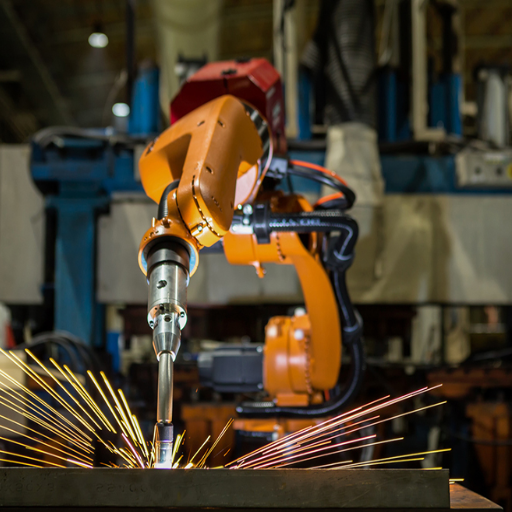
Automatic welding, due to its efficiency and precision, is widely used in various industries worldwide. This technology is used for attaining the objectives listed below in the sector:
- Automotive Industry: Components of vehicles to be assembled, like the platform and the silencer, are produced through a manufacturing process that ensures high-quality and good welds in huge quantities.
- Aerospace Sector: Welding is typically employed in the production or joining of various parts that are subjected to dynamic forces, such as airframes, engines, rotors, and their numerous components. In this case, there is a lot of intense welding.
- Construction and Infrastructure: Steelwork is a field that has well-developed welding techniques, which are used as a modern method for constructing structures that require less human force, resulting in greater efficiency and reduced stress and strain.
- Shipbuilding: This involves welding during the construction of large ships, utilizing automated welding processes for the hull and its various components.
- Energy Sector: Common in the case of assembling oil and gas drilling platforms, wind farms, and components of power plants, where high operating and safety standards are imposed on construction parts.
It would be fair to say that automatic welding has not only found a place in these three industries, but also due to its congruity with the spirit of the times.
Key Application Sectors in Welding Automation
Welding automation has transformed numerous sectors, thereby enhancing effectiveness, reducing tail costs, and improving accuracy. This is the breakdown of the application of the automation depending on five key blocks in the system:
- Automotive Industry
- The automotive sector is the primary driver of this development, particularly in high-level automated welding technologies, which are widely used in the construction of car cabs, frames, and pipes, among other components.
- For instance, in car assembly, the use of welding robots has enabled an automobile manufacturer to produce millions of cars annually while maintaining high quality and consistency, at over ninety percent.
- Data Point: More than 80% of global automotive welding processes are now automated or mechanized.
- Aerospace Industry
- In the aerospace industry, where there is a significant scope for error in weld repairs, the mechanical performance of welding machines is paramount.
- Robotic welding, on the other hand, increases accuracy and assures compliance with the stringent processes and procedures.
- Data Point: Automated welding reduces the time required to assemble an aircraft by approximately 25-30%.
- Construction Industry
- Night, with its automation, is a robot employed by the construction industry in structural steel fabrication, as well as in the construction of large autonomous structures, such as bridges, high-rise buildings, and pipelines.
- The supply and installation of steel structures are achieved within a record time, without interfering with the building’s structure in any way.
- Data Point: Out of the structures of Metals, over 60% had Automation welding processes installed within their project edge.
- Oil and Gas Industry
- Automated welding specializes in pipelines, refineries, and offshore platform fabrication.
- Automated welding is highly controlled and used in critical components to meet exact requirements and minimize error levels.
- Data Point: The oil and gas sector accounts for approximately 15% of the mechanical engineering parts sold through automatic welding.
- Electronics and Electrical Equipment
- Automated welding processes are standard when manufacturing whole electronic products (from plated circuit boards and devices to miniaturized batteries, etc.).
- It has also facilitated micro welding capacity, which is necessary for assembling tiny components.
- Data Point: Welding robots are also known to enhance the electronics and electrical manufacturing industry by facilitating production improvements of up to 40%.
The above sectors illustrate the flexibility and promise of welding automation for various industries. Its growth is key to the future of manufacturing.
Industry Distribution of Automated Welding
In my opinion, the increase in automated welding applications should be anticipated due to their widespread use across various industries, spanning multiple sectors. The automotive industry has primarily employed and continues to operate robotic welding for precision and fast production, as we have not forgotten. Industrial sectors also require welding services, including the electronics sector, which is particularly focused on welding miniature and precision components. Moreover, some segments, such as aerospace and construction, have also increased their use of robotic welding to maintain the consistency and quality of their products. Such a high level of penetration emphasizes the indispensability of welding in the current state of the manufacturing system.
Specific Use Cases in Various Industries
Automotive Industry
With its remarkable ability to increase production capacity and ensure quality, the automotive industry relies heavily on robotic welding technology. Traces are frequently utilized for this purpose, for instance, when joining body shells for automobiles. The robotic welding machines, driven by artificial intelligence, can be used for welding in any part of a vehicle, making it easier and faster to produce one while minimizing errors that can sometimes occur during the rapid production of cars.
Electronics Manufacturing
Micro-welding is highly beneficial in the electronics manufacturing sector, where delicate parts, such as printed circuit boards (PCBs) and minute connectors, are utilized in various automated subsystems. The designs depend mainly on these materials. The reason why laser welding is becoming the chosen mode of welding is its capability to perform welding on a minute or micro level, while still maintaining much better operational and soldered connections suitable for contemporary electronic gadgets.
Aerospace Sector
Applications of welding in the assembly of structures in the aerospace industry are subject to both general and specific regulations on safety and quality. When joining materials with low densities, such as aluminum and titanium, the wide applications of automated welding technologies, like friction stir welding, become a necessity. These measures provide firm and flexible joints that can be used in the making of aircraft, space systems, including spacecraft, and other similar infrastructures.
Construction and Infrastructure
The use of automated welding also plays a pivotal role in other related construction work, such as the sinking of pipes, building bridges, or constructing high-rise buildings. Arc welding is often chosen due to the reliability and strength that its joints provide. Automated systems are called for not only to ensure the work is exact as the previous one but also to quicken the pace of operations, primarily in large infrastructural projects, which are guided by time.
Medical Device Manufacturing
The development of such devices in the healthcare sector indeed incorporates several welding processes, including those used for surgical instruments, implants, and diagnostic enclosures, among others. It requires automation for the production of such miniature pieces, especially when it comes to laser welding, which is both highly efficient in terms of accuracy and helps ensure that the pieces produced can be put to good use. Such procedures can be carried out without any risks.
Renewable Energy Sector
In areas where equipment for renewable energy production, such as solar panels, wind turbines, and battery systems, is manufactured, automated welding is vital. Ultrasonic welding, for instance, plays a crucial role in the efficient fabrication of energy storage devices. In contrast, robotic welding is used to construct the parts of different systems required for the exploitation of renewable energy sources, thereby promoting sustainable development.
Some individuals may not realize this; however, many manufacturers worldwide are undergoing a paradigm shift in their age-old processing methods for various industries by exploring new welding techniques specifically tailored to suit their unique operational models.
Reference Sources
-
ScienceDirect: Automatic Welding – an Overview – Provides a detailed explanation of automatic welding processes and parameters.
-
Keyence: Overview of Automatic Welding – Discusses the concept and applications of automatic welding in industrial settings.
-
TWI Global: Difference Between Mechanised, Automated, and Robotic Welding – Explains the distinctions and characteristics of automatic welding.
-
Standard Bots: How Automatic Welding Works + Benefits and Applications – Covers the working principles, advantages, and use cases of automatic welding.
-
Novarc Technologies: What is Machine Welding? – Explores semi-automatic and fully automatic welding processes and their differences.
Frequently Asked Questions (FAQs)
Q: What is automatic welding, and how does it work?
A: Automatic welding refers to the process where welding is performed using machines and automation technologies without direct human involvement. This method relies on automated welding machines that are programmed to perform specific welds with precision, ensuring consistent quality and efficiency in the welding process.
Q: What are the types of automatic welding?
A: There are several types of automatic welding, including MIG (Metal Inert Gas) welding, TIG (Tungsten Inert Gas) welding, and robot welding. Each type utilizes different techniques and equipment tailored to specific welding requirements and applications, allowing for versatility in various welding scenarios.
Q: What are the advantages of automatic welding?
A: The advantages of automatic welding include increased welding speed, enhanced precision, reduced labor costs, and improved safety. Automated welding systems can perform welding operations with minimal human intervention, leading to higher productivity and consistent weld quality.
Q: How does welding automation improve the welding industry?
A: Welding automation is becoming increasingly important in the welding industry as it helps in optimizing the welding process. By automating welding tasks, companies can increase their welding volume, reduce operational costs, and meet the growing demand for high-quality welded products.
Q: What are the key benefits of welding automation?
A: The key benefits of welding automation include enhanced efficiency, improved quality control, and the ability to monitor the welding process in real-time. Automated welding machines can automatically adjust weld parameters, ensuring optimal results for even the most complex welding tasks.
Q: How do automated welding machines use robotic technology?
A: Automated welding machines often incorporate robotic welding technology to perform precise and repetitive welding tasks. Robotic welding offers several advantages, such as the ability to work in hazardous environments and the capability to execute complex weld designs with high accuracy.
Q: What is the future of welding with automatic welding?
A: The future of welding with automatic welding looks promising, as advancements in automation technologies continue to evolve. The integration of artificial intelligence and machine learning will likely enhance the capabilities of welding automation systems, making them more adaptable and efficient in various industrial applications.
Q: How can businesses benefit from automating the welding process?
A: Businesses looking to automate their welding processes can benefit from reduced production times, lower labor costs, and improved product consistency. By implementing modern welding automation systems, companies can streamline their operations and respond more effectively to market demands.
Q: What tools and equipment are essential for welding automation?
A: Welding automation requires specialized welding equipment, including automated welding machines, welding power supplies, and various welding tools designed for specific types of welding. These tools are crucial for achieving optimal results in automated welding applications.


