Welding is a basic skill that is critically needed in various industries such as construction, manufacturing, automotive repair, and even art. It does not matter if you are highly experienced or a novice with an insatiable curiosity, knowing the different types of welding machines and the welding processes is absolutely essential to the right choice of method for your projects. Besides, the specific welding technique has its own characteristics, applications, and advantages that are mostly dictated by the nature of the materials and the conditions. Therefore, in this article, we are going to discuss the major welding methods that you can rely on to make informed decisions and acquire a deeper understanding of the intricacies of this indispensable skill. You are going to step into the amazing world of welding machines along with their diverse capabilities!
Overview of Welding Processes
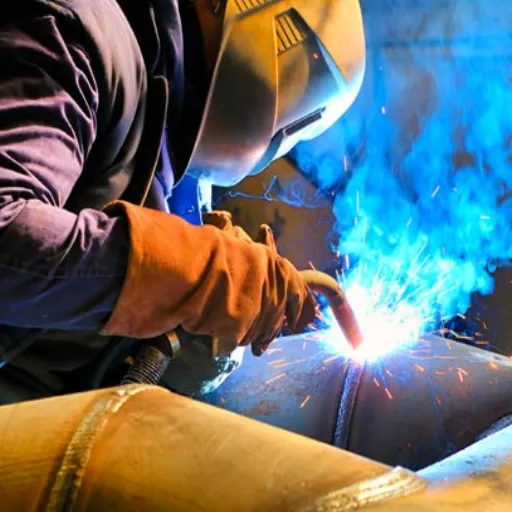
What is Welding?
Welding is an industrial method that mainly consists of applying high heat, sometimes together with pressure, to melt the interface of two or more materials, generally, metals or thermoplastics, allowing them to fuse again as one mass. Usage of filler metal is common in welding to reinstate the joint so that it merges with the final product. The various types of welding that are currently practiced range from extinct methods to cutting-edge ones such as laser and friction stir welding. The good things about welding joints are that they are strong and permanent, thus they are applicable even in the most serious conditions. Besides, technological progress is ever-present in welding, making it not only to be a field slowly fading away but rather one that creates new frontiers while solving difficult engineering problems at the same time.
Importance of Different Types of Welding
Welding of every type has its pros and cons, in that they can support different sectors that have specific requirements based on material, design, and operating conditions in general. For example, one of the most adaptable and broadly used methods, Shielded Metal Arc Welding (SMAW), is very much sought after for construction and repair works as it can work with heavy materials and can be used in tough situations like outdoor welding. On the contrary, Gas Metal Arc Welding (GMAW) not only offers high efficiency but also accuracy, thus it is the preferred technique for production operations where speed and precision are both very critical.
On the other hand, contemporary methods like lasers and friction stir welding are high in demand mainly because of the precision industries such as aircraft and auto-making which have proliferated. Laser welding, which is recognized for its capability in making exceptionally small and clear welds, is oftentimes employed in high-tech projects needing a very small amount of thermal distortion. Friction stir welding, conversely, is highly proficient at melding together light and heat-sensitive materials such as aluminum, which is essential for enhancing the fuel economy of the current cars and planes.
Apart from the various industry applications of welding, global trends along with data have also put a spotlight on them. There is a growing interest in the search for environmentally friendly and energy-efficient welding technologies which goes hand in hand with the movement towards sustainable manufacturing practices. Besides that, there is also the issue of automation which has become very popular among manufacturers and that includes robotic welding systems, as the need for high-volume production that can be scaled up is increasing. Such trends reflect the changing importance of welding technologies in the process of modern engineering and in dealing with the global challenges of the future.
Common Applications of Welding
Welding is an essential process in different industries as it permits the construction and repair of important infrastructures. As per the most recent information from ‘s search engine, automotive production, space technology, and groundwork are some of the major welding application areas that are garnering the most searches. In the case of automotive production, welding is the main technique used for the production of car frames, which makes the cars not only strong but also compliant with safety measures. In the case of aerospace, welding is utilized in the making of parts that are both light and strong enough for use in aircraft and spacecraft. Building of bridges, pipelines, and skyscrapers, where precision and strength are of utmost importance, is the major area of welding application in infrastructure development. All these applications reveal the fundamental contribution of welding in the process of technology development and the support of global industries.
MIG Welding
What Is MIG Welding?
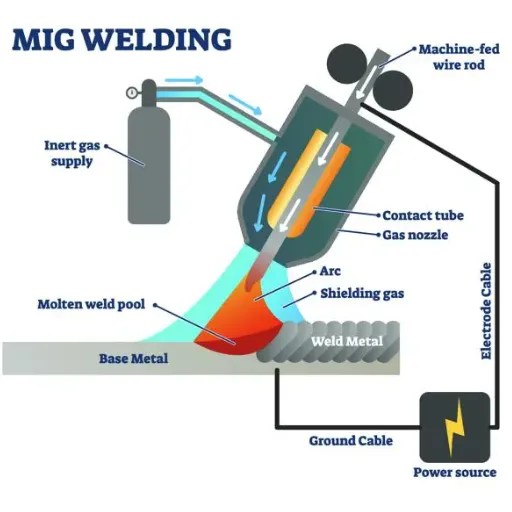
MIG welding which is the abbreviation for Metal Inert Gas welding is one of the most popular welding techniques that employ a continuous solid wire electrode. The wire electrode that is melted during the process of welding and is sent through a welding gun is kept by the inert gas which is usually argon or a combination of argon and carbon dioxide that is clean and free of impurities. The process of welding is accelerated, very little operator skill is required, and the production of exceptionally clean and high-quality welds is the hallmark of this method. The attributes mentioned before make MIG welding frequently chosen in a variety of sectors. These cover, but are not limited to, automotive manufacturing, repair, and construction, particularly in areas where materials with quick-drying production rates are required.
MIG Welding Equipment
MIG welding is a process requiring specialized equipment to produce welds that are both strong and clean. A basic MIG welding setup will consist of:
- Welding Machine (Power Source): This supplies the electrical current that is needed to generate the arc between the wire and the workpiece. Today’s MIG welding machines come with many features including adjustable settings that are able to adapt to the different types and thicknesses of materials.
- Welding Wire (Electrode): A spool of wire that can be continuously unwound is used as both the electrode and filler material. The wire to be used is decided based on the metal to be welded, e.g., carbon steel, stainless steel, or aluminum.
- Shielding gas and regulator: The shielding gas, which is a mixture of argon and carbon dioxide or pure argon (depending on the type of material), is used to protect the welding area from oxygen and other gases in the atmosphere. A gas regulator is used to maintain the desired pressure and flow rate of the gas during welding.
- Welding Gun (Torch): The welding gun directs the wire, electrical current, and shielding gas to the proper place at the weld joint. Modern welding guns are often constructed in a way that makes them easier to operate and comes with trigger control features to give the user greater comfort and precision.
- Wire Feeder: The wire feeder is a machine that feeds wire to a welding gun at a constant speed and plays a big role in arc stability.
- Protective Gear: Standards for safety equipment during the welding process include auto-darkening filter welding helmets, gloves, and protective clothing that cover the welder from sparks, UV radiation, and heat.
- Ground Clamp: This is the part that connects the workpiece to the power source, hence allowing the power circuit necessary for welding to be formed.
Using the correct equipment not only guarantees the welds to be of high quality but also increases the efficiency of MIG welding in different applications.
MIG Welding Advantages and Disadvantages
✓ Advantages:
- User-Friendly: Due to its simple operation and feeding of wire continuously, MIG welding is an easy process for beginners.
- Speed and Production: It permits quicker welding to be done than in other methods, which is why it is commonly used in industries where production rates are high.
- Flexibility: It can weld different types of metal all the way from stainless steel to aluminum to mild steel and also various thicknesses.
- Less Messy Weld: Generates very little sputter and hence the post-weld cleaning is not much either.
- Compatible with Automation: It can be automated easily for industrial applications and hence consistent and high-quality results will be guaranteed.
✗ Disadvantages:
- Equipment Cost: The initial investment including the MIG welding machine and shielding gas can be very high compared to other methods.
- Gas Requirement: A need for shielding gas makes it less portable and unsuitable for breezy or outdoor conditions.
- Precision Limits: It’s not as precise as TIG welding hence it can be a con for very detail-oriented tasks.
- Material Constraints: May have difficulties with super thick materials or with metals that need highly skilled labor.
- Maintenance: The need for the upkeep of the gas flow and wire feed systems adds to the operational difficulties.
With the latest data and feedback trends from , it’s safe to say that MIG welding continues to be the most popular welding method because of its combination of efficiency and operability. However, users who are looking for alternatives usually consider TIG or Flux-Cored welding when their priority is precision, portability, or cost.
TIG Welding

What is TIG Welding?
TIG welding, also known as its abbreviation, is a very precise welding process that uses a non-consumable tungsten electrode with an inert gas (usually helium or argon) as its protection, thus making the weld, which is why it got its name (Tungsten Inert Gas). This method is very intricate and skilled, thereby producing cleaner and superior quality welds. TIG welding is a very prestigious method because it can weld stainless steel, aluminum, and even magnesium. The latest statistics from ‘s search engine reveal that TIG welding is an area of research that attracts a lot of interest among both professionals and amateurs, especially those who prioritize the aesthetics of welding along with precision. It may take more time and skills than MIG welding and other techniques, but still, it is the preferred method in various industries where precision, strength, and appearance are considered factors of high importance. Such industries include aerospace, automotive, and art fabrication, but are not limited to them.
Equipment Used in TIG Welding
TIG welding is characterized by the need for a precise and high-standard set of tools for its work. The main equipment is made up of a welding machine that is responsible for the output control and providing the required amperage for the whole welding process. The creation of arc for the welding is done with a non-consumable tungsten electrode which is then said to provide precision and durability throughout the welding process. To keep the weld area clean, protective gas like argon or a mixture of argon and helium is used to treat the area thus preventing oxidation and contamination. In addition to this, filler rods made from the same material as the base metal are often used when joining pieces. Other necessary tools are among others: Foot pedal or fingertip for switching heat on and off, a gas cylinder for welding gases, and safety gear such as gloves, a welding helmet, and proper clothing.
Based on recent search data, it can be noted that the trend of the advanced TIG machines especially inverter-based ones being the most sought-after has been increasingly recognized. The lightweight design, energy efficiency, and enhanced control features of the inverter-based machine make it particularly attractive to both professionals and hobbyists. Learning all the different aspects of the TIG welding equipment from the internet and other users also help the users to obtain the best quality work that suits the requirements of the specific industry.
Pros and Cons of TIG Welding
TIG welding (Tungsten Inert Gas) is the process that everyone that accepts the pros and cons associated with it and hence, the negatives outweighed if one considers the positives in the balance. Hence, the use of this method should be considered depending on the specific situation and all the factors weighed:
✓ Pros:
- High-Quality Welds – TIG welding gives very accurate and neat welds, with very little spatter and no need for secondary cleaning, thus it is very suitable for critical or aesthetic applications.
- Versatility – This welding procedure can be used for almost all types of metals like stainless steel, aluminum, magnesium and even exotic alloys which gives it a very high adaptability.
- Excellent Control – The TIG welding process is highly controlled, so there is good control over the welding process and the operator can even melt the metals and run the bead at the same time, which is indeed a kind of craftsmanship for intricate projects to create the desired effect.
- No Filler Material Requirement – For some joints, TIG welding can be done without the use of any additional filler material which minimizes waste and simplifies the process.
✗ Cons:
- Slower Process – When compared to other welding techniques like MIG or stick welding, TIG welding can be a slow process resulting in less production and hence not the best option for high-production settings.
- Skill-Dependent – Another complexity of the requiring operator to reach the highest level of skill and experience plus the need for precision comes from the fact that sustaining a torch operation alongside foot pedal use become more difficult.
- Higher Equipment Costs – The specialized equipment such as inverter TIG machines and inert gases used make TIG welding more expensive than others.
- Not Ideal for Thick Metals – Application of TIG welding to thick materials is not efficient because it is slow and requires a lot of operator effort to get a point of penetration.
In general, although TIG welding is often regarded as a precise and clean welding technique, the main disadvantage of this process is the requirement for highly skilled operators. On the other hand, the main disadvantage is that it is slow. Weighing these pros and cons considering your project requirements can be helpful in finding out if the TIG welding is appropriate for your needs.
Stick Welding (SMAW)
What is Stick Welding?
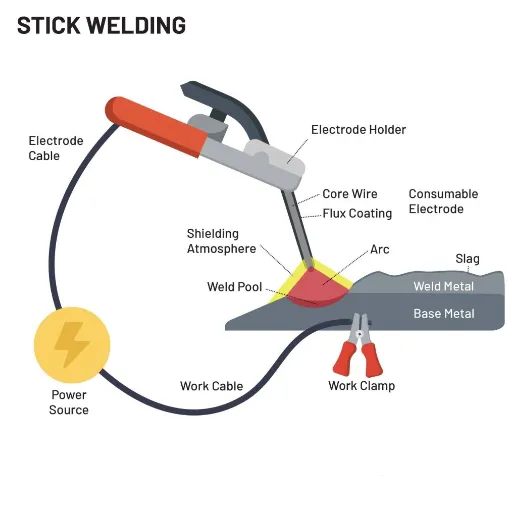
Stick Weldling, also referred to as Shielded Metal Arc Welding (SMAW), is one of the numerous arc welding processes that is done with the aid of a human hand and flux coated consumable electrode for welding metals. The “stick” or electrode is the source of heat where an electric arc is produced between the electrode’s tip and the workpiece, thus, melting the electrode as well as the base material and creating a solid weld. The flux covering on the electrode melts away forming a gas that shields the weld area from being contaminated by the atmosphere during the process of welding the electrode and base material. Therefore, a strong and clean bond is guaranteed.
The biggest benefit of stick welding is the fact that it can be done in various ways. It accepts numerous materials like steel, cast iron, chromium steels, etc. Moreover, indoor or outdoor welding can be done regardless of the weather, even in windy conditions. This procedure though is still economical, needing less equipment and preparation. Yet, stick welding also requires a lot of practice and skill to reach the same level every time since the quality of the weld depends a lot on things like the position of the electrode, speed of travel, and length of the arc. The industry has found a way around those difficulties and stick welding is still a preferred method in the construction, repair, and industrial application sectors because of its flexibility and dependability.
Equipment Used in Stick Welding
Stick welding also called Shielded Metal Arc Welding (SMAW) requires certain basic pieces of equipment for its operation and to ensure the quality of the weld. The main components consist of:
- Welding Machine: This is the electricity source for the arc. Depending on the needs it can be an AC, DC, or one that works with both.
- Electrodes (Stick): They are rods that are exposed to current and welded together. Electrodes are classified according to composition and size and depend on the material being welded and the application.
- Electrode Holder: This is an instrument that has been specifically designed to hold the electrode tightly but still allow some movement and control during the welding process.
- Ground Clamp: This is a critical accessory that connects the welding device to the workpiece and completes the electrical circuit.
- Protective Gear: Safety comes first, and that is why welders are equipped with face shields with lens that darken automatically, gloves, fireproof coats, and boots with steel toes to protect against burns, heat, or UV rays.
- Welding Cables: Very strong cables are necessary to transfer the current from the machine to the welded piece through the holder and to the ground clamp.
- Chipping Hammer and Wire Brush: They are used to clean the welding area and remove slag for a smooth and polished finish.
The introduction of modern inverter-based welding machines by vendors like Miller or Lincoln Electric has changed the scenario of welding technology. They are now being used in both industrial settings and hobbyist applications due to their portability and energy efficiency. This equipment’s mobility and flexibility still keep stick welding a valuable technique in numerous industries.
Pros and Cons of Stick Welding
✓ Pros:
- Versatility – Stick welding can be done on a lot of different kinds of materials such as steel, stainless steel, and cast iron which makes it very adaptable and suitable for many projects.
- Cost-Effective – The cost of the equipment and electrodes is quite low compared to other welding methods which makes it affordable for both professionals and hobbyists.
- Portability – Stick welding is especially inverter-based welding machines which are small and portable, hence suitable for outdoor or on-site work.
- Effectiveness in Harsh Conditions – This method does not let the external environment affect its performance; it can work well in windy or moist conditions where other procedures might fail.
- No External Gas Required – Just like in the case of Stick welding, the use of electrodes covered with flux means that there is no need for external gas cylinders thus reducing costs and increasing convenience.
✗ Cons:
- Slower Process – Stick welding can take more time than other processes, e.g., MIG or TIG, especially in large projects.
- Higher Skill Requirement – With stick welding, it takes a lot of practice and skill to produce clean and good quality welds.
- Excessive Slag Cleanup – There will be slag from the rod that has to be removed after welding which can increase the project duration.
- Limited Thin Metal Application – Stick welding should be avoided for thin materials as it can easily cause burn-through.
- Electrode Changes – The constant task of changing electrodes may slow down the operation, especially in the case of long welding jobs.
In analyzing the advantages and disadvantages, it can be concluded that stick welding is still a method worth using through the portable, versatile, and cost-effective applications it offers. Though, stick welding may not be the right choice for high-precision applications or rapid production speeds.
Flux-Cored Arc Welding (FCAW)
What is Flux-Cored Welding?
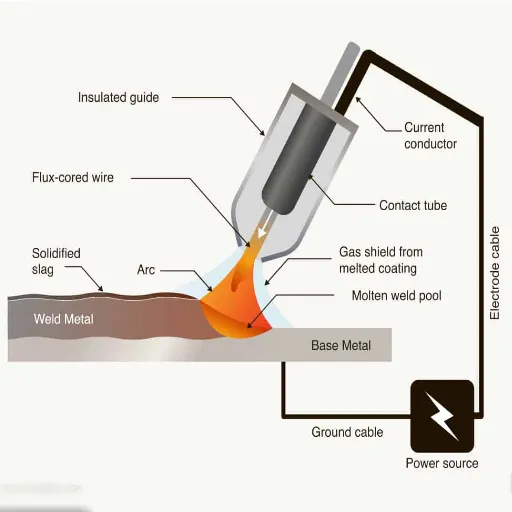
Flux-Cored Arc Welding (FCAW) is a process that can be classified as either semi-automatic or automatic and involves the use of a continuously extruded tubular electrode filled with a flux core. The flux present in the electrode has several functions, including the production of a shielding gas, stabilization of the arc, and prevention of the weld pool getting contaminated by air. Normally, an external shielding gas is not mandatory in this process, which is a major reason it is favored in situations like outdoor work where wind may cause disruption in gas coverage. FCAW is a rapid method that is often used in construction, shipbuilding, and heavy fabrication with strong, high-quality welds being the primary result. The process’ versatility allows for different kinds of metals to be welded, such as steel, stainless steel, and cast iron, and FCAW method excels in processing of thicker materials.
Equipment Used in Flux-Cored Welding
The Flux-Cored Arc Welding (FCAW) process introduces cutting-edge equipment which guarantees superb performance and welds of the highest quality. The fundamental equipment to the process comprises three basic items, namely; the flux-cored welding machine or power source that can provide the desired voltage and amperage. A wire feeder is also very important, as it continuously feeds the flux-cored electrode wire through the welding gun. A welding gun, which is specifically made for flux-cored wire, connects to the power source and wire feeder.
Yet, the right personal protective equipment (PPE) is very important and consists of the operator’s welding helmets with auto-darkening lenses, heat-resistant gloves, and durable clothing made of fire-retardant material. Sometimes, gas cylinders for shielding may be necessary; the choice of either the self-shielded or gas-shielded flux-cored wire will determine the need for gas cylinders. Other auxiliary equipment includes a grounding clamp, a chipping hammer, and wire brushes for welding and base metal preparation. Modern welding equipment has included advanced technology in the form of digital controls, exceptional wire feeders, and compact designs.
Pros and Cons of Flux-Cored Welding
Flux-cored welding, nicknamed FCAW (Flux-Cored Arc Welding) is one of the main welding processes favored in the construction and fabrication industries. This article will present both pros & cons of this method by tapping into the latest data and professional judgment.
✓ Pros:
- High Deposition Rate: This welding process deposits faster than the others, and therefore it is the best choice for mass applications.
- Excellent Performance Outdoors: This process is not affected by windy conditions or external gas because the flux inside the wire is doing the same job outside gas would do.
- Versatility with Materials: It is less dependent on the modern methods, e.g. it is able to effectively go through steel and stainless steel even if they are thick and still be valid for heavy duty projects.
- Ease of Use: FCAW only requires a little pre-cleaning of base metals and this allows for reduced time and effort in preparation.
- Cost-Effectiveness: Its high efficiency and versatility make it a cost-effective solution for many welding needs.
✗ Cons:
- Slag Removal Required: The flux core leaves behind slag that must be removed after welding which can lead to longer cleanup times.
- Potential for Porosity: If proper technique is not used or if there are environmental factors that are not conducive, then porosity can occur thus compromising the weld’s strength.
- Higher Fume Generation: The FCAW process generates more fumes compared to MIG welding, therefore proper safety measures and ventilation are a must.
- Specialized Equipment: The method needs special welding machines and consumables that may not be available for every operator.
- Limited Application on Thin Metals: FCAW is not the best process for thin materials because excessive heat can lead to warping or burn-through.
Ultimately, it is the nature of the project that will determine whether flux-cored welding is the best option or not. Although its efficiency, adaptability, and performance under hostile conditions are very attractive, the drawbacks like post-weld cleanup and safety should always be considered when making a decision.
Types of Welding Machines
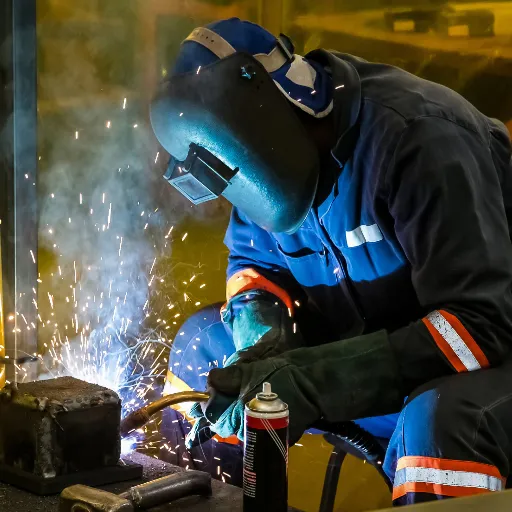
Welding Machines Overview
Welding machines are nowadays necessary equipment, not just luxury or woodworking tools, in construction, metalwork, and several other industries, since they are enabled to join together metals by different welding processes. Besides, these machines are each intended for one welding process only; this may be, either, MIG (Metal Inert Gas), TIG (Tungsten Inert Gas), Stick Welding (SMAW), or Flux-Cored Arc Welding (FCAW). In contrast, the performance of every single machine is determined by the choice of the materials and the requirements of the project.
The modern welding machine has undergone substantial innovations and development, aiding the rise of precision, efficiency, and user-friendliness through technologies. As an illustration, inverter-based welding machines have become very common because of their weight, energy consumption, and their consistency in performance. They are frequently employed in places like car repair, construction, and industrial uses to their mobility and adaptability to different welding jobs.
Taking the trends into consideration, machine manufacturers have begun placing more emphasis on having digital interfaces, along with other smart features, in welding machines. For example, some of the top-tier models have features such as adjustable voltage and amperage settings, various pre-programmed modes designated for specific welding types, and monitoring through real time. Not only does this contribute to improved weld quality, it also lessens the amount of teaching which needs to be done for novices in welding.
The choice of a welding machine must be based upon the material to be welded, its thickest, and the scale of the project. In the case of hobbyists or light-duty work, compact MIG welding machines usually suffice. On the other hand, industrial projects would require rugged multi-process welders that can take a heavy-duty workflow. Using the combination of data-driven insights and comprehension of the individual needs one can make better choices to gain maximum effectiveness and productivity in the welding applications.
Welding Machines Types Explained
Welding machines come in many different types, each ready to work in a given application dependent on the material, environment, and project requirements. According to the most recent data from the search engine, the four most common types of welding machines are:
MIG Welders (Metal Inert Gas)
MIG welders are the devices who are most often used in joining metals. They happen to be versatile as well as user-friendly which makes them the best choice for beginners and professionals alike. These welders extract their function through a wire electrode and shielding gas which allows them to weld thick and medium-thick materials like steel and aluminum.
TIG Welders (Tungsten Inert Gas)
TIG welding is one of the top welding processes for its precision and working possibility of doing intricate jobs. This method is often used in the industries that choose neat and esthetical welds; therefore, the best applications for TIG are stainless steel and non-ferrous metals.
Stick Welders (Shielded Metal Arc Welding – SMAW)
Stick welding is the rugged type of welding which is also very efficient, hence, suitable for outdoor or heavy-duty projects. It can be combined with almost any material including cast iron and steel and even in adverse conditions such as windy or damp ones.
Plasma Arc Welders
This high-end option utilizes ionized gas along with electric arc to generate very high temperatures required in welding either very thin materials or exotic metals. Besides, plasma arc machines are mostly found in precision industries like aerospace.
💡 Pro Tip: The process of selecting the right welding machine is done through understanding your project requirements and knowing the material type. Moreover, by referring to the latest tools and resources, such as online search trends, you can make your choice correspond to the most effective solutions available at the moment.
Right Welding Machine for Your Needs
When picking the best welding machine, it is necessary to consider not only the material and the welding process but also the latest wisdom from data centers like the search engine. The prevailing trend suggests MIG welding machines continue to be the most searched and most preferred option and the reason for this is their ability to work with various metals and their beginner-friendly characteristic. Nevertheless, in case the project requires creating highly detailed pieces out of thin or rare metals, searches reveal that there is a rising interest in TIG welding machines because of their accuracy and control. In the case of the aerospace or automotive applications, the high-tech industries are slowly but surely turning to plasma arc machines for their ability to make delicate and high-quality welds. The combination of this knowledge with your specific welding application will result in your selecting a machine that is not only technologically advanced but also satisfying your project requirements with complete assurance.
Frequently Asked Questions (FAQ)
❓ What are the popular types of welding used in various industries?
MIG, TIG, SMAW and FCAW (Flux Core Arc Welding) are the types of welding that are generally agreed upon as the most important ones. Each type of welding mentioned has corresponding application areas. As an instance, one can easily spot MIG technique in automobile production where its high speed and efficiency over thin metal sheets are very useful. On the contrary, the TIG process is used for high-quality and strong joints in ultra-clean areas like titanium welding, for which the strongest and cleanest joints are required. Knowledge of the various welding methods would help an aspiring welder choose the right process for his welding career, which would be a big factor in his favor.
❓ How does MIG welding compare to TIG welding?
The comparison between MIG and TIG welding typically leads to the selection by the customer of a particular project that has its own unique requirements. Using a wire that is fed continuously is the basic characteristic of MIG welding. This thus making it faster and more material-friendly for general repairs and construction industries. On the contrary, TIG welding allows the welder to hand-feed the rod thus more control and precision especially when dealing with delicate materials such as aluminum or stainless steel. Although MIG is usually viewed as more user-friendly, nevertheless, previous years have seen TIG becoming more and more popular with the demand for high-quality welds. The advantages of each welding machine type are determined by the job’s specific requirements.
❓ What is the flux core welding process?
Flux Core Arc Welding (FCAW) is one of the methods to perform welding that involves a wire with a tube filled with flux which when melted, produces a shielding gas. The weld area is expected to be free of contaminants and therefore outside conditions, which poses a great risk to the weld, would be such an area, then the FCAW method would be used for the weld. Furthermore, it is preferred in the construction industry when dealing with rusty materials or in places with limited access to traditional gas supplies. This welding is quite productive and can be applied to both materials requiring the less heating of the workpiece as well as to thick materials, hence being the subject of different applications.
❓ Can you explain the different types of welding machines?
There are different kinds of welding machines like MIG, TIG, stick welding (SMAW), and flux core welding. The main consideration for the design of the welding machines is that each caters to a specific process and material at the same time, while MIG welding is the most popular choice of the users at home and professionally due to its ease of use and quickness. Inversely, stick welding machines are often less expensive and allow for operation even with the workpiece being rusty or in bad conditions. Hence, it is crucial to know which machine to apply in welding in order to achieve the desired outcomes in various welding applications.
❓ What are the 5 types of welding commonly used today?
The 5 welding types that are mostly accepted and practiced within the industry are MIG, TIG, SMAW, FCAW, and plasma arc welding. Each of these processes has its unique advantages and applications. For instance, one can say that plasma arc welding is the best for precision most of the time, and therefore, it finds a regular application in both the manufacturing and construction sectors. In contrast, SMAW is a universal technique that can be used in various applications including underwater welding. A person can select the most appropriate technique for his/her project if he/she understands the different types of welding discussed in this article.
📚 Reference Sources
- •
Bureau of Labor Statistics (BLS): Welders, Cutters, Solderers, and Brazers – This page provides detailed information about welding professions, including the types of welding processes. - •
South Carolina Department of Employment and Workforce: Explore SC@Work_Flyer_Welders – A resource discussing various types of welders and their roles. - •
Texas Department of Insurance: Welding Workplace Program – This document outlines over 80 different types of welding processes, including common ones like arc welding. - • guide for welding techniques