The process of welding sheet metal is both a scientific and an artistic pursuit that necessitates the utilization of techniques, precision and talent in order to achieve the best results possible. Welding of thin sheets of metal skillfully and economically will undoubtedly make your projects durable and of high quality. The post will initially introduce the basic welding techniques and processes followed by practical tips that will give you the confidence to perform various jobs. You will have in front of you, the very easy and directly applicable tips, the expert’s advice that will take you to the success, and everything from the selection of the most suitable tools and materials to the buildup of particular welding techniques. So be ready to conquer the metal and the world of welding projects!
Understanding the Basics of Welding Sheet Metal
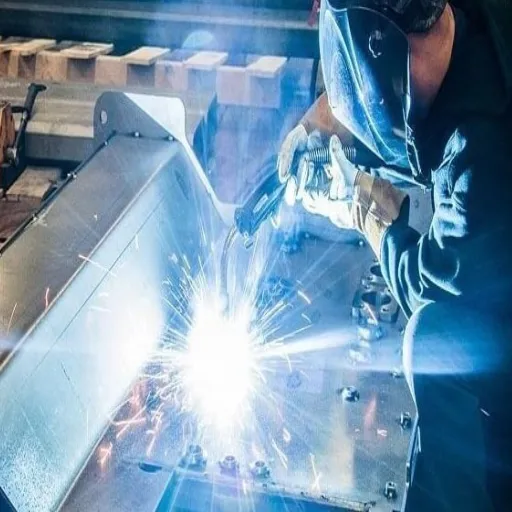
What is Welding?
Welding is a term that identifies a manufacturing operation wherein two or heating processes of metallic or thermoplastic pieces occur. The parts are then cooled, and a strong joint is created in the materials to which they have been permanently united. This method is widely employed in various industrial sectors, for instance, building, automotive, aircraft, and production. There are several types of welding methods such as MIG (Metal Inert Gas), TIG (Tungsten Inert Gas), and stick welding, and they each possess particular applications and materials. The latest news indicates that the modern engineering field hopelessly continues to need welding as a skill that has been gradually enhanced through automation and precision techniques which make it even more efficient and reliable.
Types of Sheet Metal Used in Welding
Welding generally involves an array of sheet metals, which are each characterized by their properties and functions and thereby applicable in specific areas only. Some of the most commonly used sheet metals in welding are:
| Metal Type | Properties & Applications |
|---|---|
| Steel (Carbon Steel and Stainless Steel) | Steel is one of the most popular sheet metals, being strong, tough, and versatile all at once. Carbon steel is cheap and perfectly suited for structural applications, whilst stainless steel is resistant to corrosion and is frequently used in the food processing, medical, and building sectors, among others. |
| Aluminum | Aluminum is another popular welding metal that is light and there is no risk of corrosion. It has superb thermal and electrical conductivity, which made it a must-have in the automotive, aerospace, and electronics industries. |
| Copper | Copper’s excellent heat and electricity conductivity allows it to be used in unique applications. In addition, the metal is also resistant to rust and weather. |
| Brass | Brass is a mixture of copper and zinc and is thus it is easily machined and has a nice look. Decorative items, plumbing fixtures, and musical organs are among the common uses. |
| Galvanized Steel | Galvanized steel is produced by covering steel with a layer of zinc that prevents rusting, thus making the steel a long-wearing material for outdoor structures, car parts, and HVAC systems. |
According to the latest information, the mentioned sheet metals have been widely used in different dedicated applications which is primarily due to the progress of welding technology and material sciences. The use of laser welding and robotic automation has simplified the handling of complicated materials such as aluminum alloys thereby increasing the efficiency and accuracy of the large scale manufacturing processes. Eventually, the choice of sheet metal is determined by the particular welding method and the requirements of the project.
Importance of Welding in Metal Fabrication
Welding is the major factor in metal fabrication, providing the basis for strong and long-lasting connections between metal parts. As per the latest data, the global metal fabrication industry is heavily dependent on the use of sophisticated welding methods to fulfill the need for high-quality and affordable products. Processes such as TIG, MIG, and friction stir welding are used increasingly and are popular due to their precision and flexibility especially in aerospace, automotive, and construction sectors. The trend also indicates a sharp increase in the searches related to automation in welding, proving an industry change towards the incorporation of robotic and AI-driven systems that would not only enhance productivity but also reduce labor-intensive tasks. This transformation demonstrates that welding is no longer merely a connection method but also a vital factor in the progress of technology and industry.
Standard Welding Techniques for Sheet Metal

TIG Welding for Precision
TIG (Tungsten Inert Gas) welding is a method still in the lead when it comes to precision sheet metal fabrication. The ‘s search engine has revealed that queries on “TIG welding for thin metals” and “TIG welding techniques for precision” have not only increased but become more pronounced as if to indicate a trend-up of concern about the quality and accuracy of welds in the industry and thus growing demand thereof.
TIG welding is the technique of choice for its wonderful capability of creating beautiful, practically invisible welds with little heat so that the material would be unaffected—for example, warping costless metals like aluminum or stainless steel. Wilting bead precision control and virtually no spatter go together to give joining of superior quality for usages in aerospace, automotive and art metalworks. Rising trend in automation in the welding industry primarily drives the introduction of robotic TIG systems which would be catering to needs for precision both traditional and contemporary.
MIG Welding: Efficiency and Speed
MIG (Metal Inert Gas) welding, or Gas Metal Arc Welding (GMAW), is the process that takes the acclaim of being the fastest and the most efficient welding method. As a result, it has become a very common technique in many different industries. As a matter of fact, continuous feeding of a wire electrode and shielding gas are the features of this process thus, making it very suitable for automating large-scale production and high productivity particularly in the latter. One of the greatest benefits of MIG welding is its versatility; it can weld practically all metals from aluminum to steel, and not only that but also from thin to thick materials. The latest trend in ‘s search engine data shows queries on “fast welding methods” and “best welding for industrial use” pointing at MIG welding as a preferred solution due to its ability to provide consistent, clean welds with very little downtime. No doubt, since it may not be as precise as TIG, the high deposition rates and versatility of MIG make it a foremost player in construction, automotive and metal fabrication sectors.
Flux Core Welding: Advantages and Applications
FCAW or flux core welding is among the most parent and the most reliable welding methods that are up-to-the minute in being up in heavy-duty industrial areas and outdoors. As per the latest data from ‘s search engine, “why use flux core welding” and “best welding techniques for structural steel” are amongst the queries users commonly make. One of the most important features that distinguish flux core welding from the rest is its capability to produce strong and reliable joints even under unfavorable conditions, such as high winds or when the base metals are somewhat contaminated. In the case of certain types, the use of a flux-filled wire allows the process to be carried out without any external shielding gas whatsoever, thus making it an excellent choice for outdoor areas where gas protection could be blown away. The facilitating of high deposition rates and the single pass welding of thicker sections pencil it down as a very efficient method for mega projects like shipbuilding, construction of steel structures, and heavy equipment manufacturing, etc.
Preparing for Welding Sheet Metal

Choosing the Right Equipment
Careful consideration must be given to the selection of tools for the welding of sheet metal, as the right ones will enable one to attain precise and fine work done quickly. In most cases, a MIG welder is the one to go for since it is easy to work with and produces very clean and neat welds on the sheets of metal that are very thin. Furthermore, on the other hand, TIG welders are the best choice for very detailed jobs where utmost accuracy is the need and this is because they give one total control of the heat and the weld’s look. Further, it is recommended that a welder with adjustable amperage and a cooling system that will prevent overheating during prolonged use be employed in the welding process so that one can receive maximum benefits of the equipment. Again, it is the case that both professionals and beginners in welding should buy and wear personal protective equipment (PPE) such as a welding helmet that is of very high quality, gloves, and fire-resistant clothing as a measure of safety during welding operation. The trend observed is that the industry is slowly moving towards a larger demand for portable and multi-process welding machines which can accomplish all welding tasks and thus through welding machines, takes convenience and versatility.
Surface Preparation Techniques
It’s quite evident that the right surface preparation is not only the key to getting strong welds but also to having them last long. Among the most usual ways of preparing the surface, the first step is to remove the dirt, grease, rust, or paint from the metal with the help of wire brushes, grinders, or chemical solvents. Then, apparently, it might be required to smooth and bevel the edges in order to enhance the strength of the joint and eliminate the defects. Recently, the data from the search engine of showed a significant increase in the number of queries concerning surface preparation for welding which are indicative of a rising awareness of its influence on weld quality. Thus, the application of methods like sandblasting or specially cleaning solutions is often sought by people dealing with detailed projects. This pattern is indicative of the industry’s concern for precision and the importance of preparatory work in contemporary welding practices.
Safety Measures in Sheet Metal Welding
It is a fact that sheet metal welding is a very safety-sensitive operation and hence, above all, the safety and well-being of the welders are the priorities. According to data obtained from search engines, the most common questions of all time in this field are related to personal protective equipment (PPE). It is obligatory to wear flame-resistant clothing, a welding helmet with eye protection, heat-resistant gloves, and steel-toed boots to ensure that the risks are very low. Besides, all the workers should be in a well-ventilated area to prevent inhalation of toxic fumes and also to have fire-resistance barriers around the welding spot as these steps are very important for safety. The queries on tool safety imply a growing concern for the welder’s safety which in turn suggests the need for regular checks of the equipment including torches, electrodes, and grounding cables. Hence, there is a synergy between safety measures and the modern industry’s best practices whereby risks are considerably reduced, and a secure welding environment is attained.
Executing the Welding Process

Setting Up Your Work Area
The creation of a secure and efficient working place is one of the main contributors to the success of any welding project. Ventilation, clean air supply, and removal of smoke are the first considerations for making the place healthy to work. Good ventilation can prevent respiratory disorders and is also a sign of the latest safety regulations being met. No fire risk should be present in the area and the operator should be able to reach all the welding tools easily. The surrounding area should be protected with welding curtains or screens from the sparks and heat. Based on the most recent queries at ‘s search engine, a question that often pops up in the context of setting up a workspace is, “What surface is best for welding?” The most suitable one is a sturdy, fireproof, metal or other non-combustible materials table. Never use wood or plastic tables as they are both susceptible to catching fire or melting in high heat. Consequently, you are not only providing a safe but also a productive work area.
How to Perform a Tack Weld
A tack weld is a basic technique that allows the metal pieces to be temporarily held in place before the final weld is applied. As per the data from ‘s search engine, a large number of people are interested in knowing the right way to do a tack weld. The following is a step-by-step process that guarantees accuracy:
- Prepare Your Workspace – See to it that your welding surface is clean, strong, and non-flammable, ideally, steel or a similar material. Also remove any dirt and impurities to have a seamless operation.
- Gather the Proper Tools – Bring in the suitable welding machine, personal protective equipment, and filler materials that match the kind of metal you are working with and the requirements of your project.
- Align the Metal Pieces – Place the metal parts in the right position and use clamps or magnets to hold them there safely. Taking care at this stage will go a long way in ensuring the stability of the structure.
- Set the Correct Parameters – Make your welder ready with the right voltage, amperage, and wire feed speed based on the thickness and type of metal. Consult the manufacturer’s recommendations for the best settings.
- Make the Tack Welds – Start the welding process by making small, short welds (tack welds) at important spots along the joint to keep the metal pieces together. Normally tacks are made about every 2 to 3 inches throughout the length of the joint.
- Inspect the Welds – After welding, the tack welds should be inspected for strength and correct position. If there are any that are weak or displaced, take them out and redo before moving on to the main welding.
By following these instructions, it becomes possible to perform a tack weld effectively, thus laying down a firm foundation for the entire welding project. Tack welding is important to keep the parts in place and to minimize the risk of distortion during the final weld.
Understanding Spot Welding Techniques
Spot welding is a resistance welding technique that is most widely used for joining together several metal sheets at particular points. It works by applying pressure and sending an electric current through the materials to generate localized heat that melts and merges the sheets at the specified spots. This method is most commonly used in car manufacturing, electrical devices, and other fields that require fast and reliable bonding of metals.
Spot welding is regarded for its rapidity, cost-saving nature, and simplicity of automation. The weld strength, however, is dependent on a variety of factors, such as the thickness of the material, the condition of the surface, the force acting on the electrode, and the duration of the current. Current studies reveal that the use of artificial intelligence in conjunction with spot welding is one of the most notable technological advances in the field. With this, one can predict the weld quality and to adjust the process according to the applications. Such new developments will lead to higher accuracy and sturdiness of welded products.
Challenges in Welding Thin Metal

Common Issues in Welding Thin Metal
Welding thin metal brings along a lot of problems because the metal is delicate and can easily burn through. Thin metal such as sheet metal, during the process of joining, can lose its properties and melt only to be formed again; hence, it can get warped or punctured depending on the intensity and duration of the heat. Strong weld joints that do not compromise the metal’s aesthetic or functional properties are also quite often a nightmare. The reason for this is that some factors such as heat input are improper, joint design is inadequate, and mastery of welding techniques is lacking.
Current information and technological advancements indicate that techniques such as pulse welding, advanced gas tungsten arc welding (GTAW), and laser welding can all be very helpful in solving the problems inherent in welding thin metals. For example, the controlled heat used in pulse welding not only keeps the weld strong but also makes burn-through less likely. Plus, the use of computer-assisted systems in the welding process guarantees exactness and effectiveness, allowing for the production of first-rate products even when dealing with thin materials.
Best Practices for Welding Thin Sheet Metal
When welding thin sheet metal, the key to good practice is precision and control, and if one can manage these, the bad results, for instance, warping, burn-through, and weak joints can be avoided. Here are some best practices based on newer planes and data that will guarantee welding success:
- 1
Select the Appropriate Welding Process
One should use a welding technique that is meant to be used on thin materials, for example, TIG (GTAW) and MIG with low heat or less current. They give off better control and thus the chance of burn-through is greatly reduced while strong and clean welds are made. - 2
Optimize Heat Input
Use the technique of pulse welding and set your machine to lower amperage to less heat in the specific areas of the metal being joined. This method will result in no warping and at the same time a weld of uniform good quality will be produced. - 3
Prepare the Material Properly
The metal sheet should be cleaned and free from any rust, oil, or other contaminants. Suitable methods for cleaning are grinding or using chemical solutions, as they promote the best weld quality and decrease the chances of defects. - 4
Utilize Backing Bars or Heat Sinks
Using a copper or aluminum backing bar placed behind the metal will help to quickly lead away the heat created during welding and the metal will not warp. Additionally, better results are achieved for even the thinnest sheets. - 5
Experiment on Scrap Pieces
Before applying welds to the actual piece, one can practice on scrap metal of the same thickness as the original. This gives the opportunity to very precisely adjust the machine settings and become aware of how the material reacts to heat. - 6
Work in Small Sections with Intermittent Welds
Welds should be done in parts with intervals as this will lower the heat at the welding point and consequently, the part will not be deformed. To further improve the precision of the final product, metals may be allowed to cool off between each pass. - 7
Inspect and Test Weld Integrity
After welding, the joint should be checked carefully for gaps, cracks, or weak spots. Non-destructive testing (NDT), for example, is one of the testing methods that guarantees weld quality without compromising the integrity of the structure.
The practice of these best practices leads one to quality, consistent welds on thin sheet metals with less occurrence of the usual issues. Plus, in conjunction with modern welding technology, periodically updating with industry trends could also be beneficial, as inferred from recent research data and developments in welding techniques.
Tips for Achieving Strong Welds on Thin Metal
Strong welds on thin metal can only come about when the traditional know-how is complemented with the fresh insights. The latest search trends indicate that professionals are putting more and more focus on aspects like heat control accuracy and the right welding technique for the job. At times, certain welding methods such as TIG are being often mentioned for their precision and for also being less detrimental to the integrity of the sheet.
The impact of precision and reduced material movement can result from the introduction of technology like laser welding, a blazing hot method, which is one of the most popular processes according to search trends. Moreover, these techniques also raise the importance of proper joint finish and highlight that the clean and well-fitted joints are necessary for flawless weld fusion. Additionally, increased use of advanced personal protective equipment (PPE) to ensure safety during the operation of modern equipment is becoming a larger concern among the professionals in the industry.
If one is to combine these strategies with the continuous learning and the dynamic nature of the welding world, one would still get strong, reliable welds but the challenges associated with working with thin materials would have been addressed simultaneously. The application of these tips along with taking advantage of the latest technology could considerably speed up the process and improve the quality of the welds.
Frequently Asked Questions (FAQ)
What is the welding process for sheet metal?
MIG and TIG welding are among the very short list of methods that will normally be employed for welding sheet metal. The MIG method, which consists of constant wire feeding and gas shielding like carbon dioxide, is mainly the first option for thinner sheets due to its speed and ease of operation. On the other hand, TIG welding gives more control and precision; therefore, it is used for very intricate designs or when working with heat-sensitive materials. Understanding the differences of one’s welding processes could be a big help in the selection of the right technique for the job.
How do you tack weld sheet metal properly?
Tack welding is a major part of the manufacturing process for sheet metal parts. It consists of making tiny welds at the right places to keep the pieces together until the complete weld is done. When tack welding, it is very important not to use too high a temperature, as this might result in the metal warping. A MIG gun with the proper wire diameter, like 030 wire, will strengthen yet keep the tack welds manageable. The correctly positioned tack welds will also facilitate the final joining process by keeping the pieces in the right place.
Can you weld thin metal using MIG and TIG methods?
Yes, both MIG and TIG methods can be used to weld thin metal, but each has its own pros and cons. MIG welding is basically quicker and it fits more into the fast-paced projects where speed is the most important factor, while TIG welding gives more accuracy especially when working with very complicated designs or materials like aluminum. It becomes very crucial to regulate the settings on your welding machine to provide lesser heat for the thin gauge materials in order to avoid burn-through or warping. Moreover, an appropriate filler metal can improve the weld’s quality.
What are the best practices for welding patch panels?
Welding patch panels necessitates employing extremely detailed and sophisticated methods to achieve a robust and imperceptible joint. The first step is to get rid of all the metal holes by preparing the edges of the patch panel and the welding area. It is suggested to apply the stitching weld technique, which consists of applying short welds, waiting for the metal to cool down before the next application, and thus minimizing distortion. Furthermore, using a grinding wheel to remove the excess metal after welding can help achieve a very nice and smooth finish. The weld is also kept safe from contamination by having good gas flow during the welding operation.
How can you avoid warping when welding?
One of the key factors to consider when wanting to avoid distortion of metal sheets during the welding process is regulating the heat input. Better heat management can be achieved through the use of a pulsed TIG setting, switching between MIG and TIG, etc. In addition, controlled welding speed coupled with an intelligent placement of tack welds will keep the heat concentration at a minimal level in any one area. Ensure that you consider the thickness of the metal when welding and then modify the welding parameters accordingly. Apart from this, the use of a filler metal that is similar to the base material in terms of compatibility can not only enhance the weld’s properties but also minimize the distortion at the same time.
Reference Sources
Welding – Sheet Metal Course
This course from Northcentral Technical College provides insights into blueprint reading and welding techniques for thin metal, aimed at fabricators and professionals.
Three Main Types Of Welding – SCI
This blog from Southern Careers Institute discusses the main welding types, including MIG welding, which is commonly used for sheet metal work.
Welding Processes – College of the Canyons
This academic resource explains various welding processes, including arc welding, and their applications in metalwork.