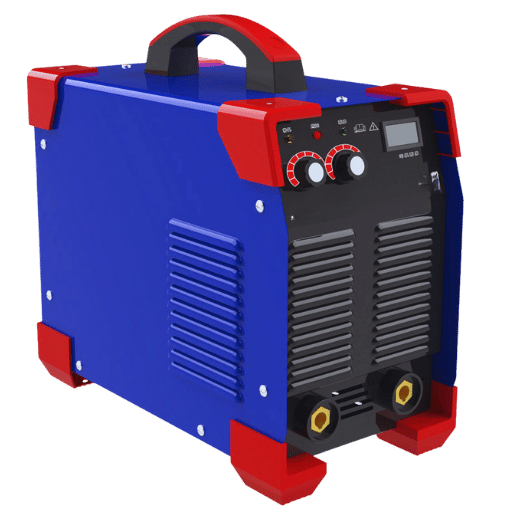
Welding equipment is of prime importance, whatever the welding project, and for some, it’s a day-to-day professional job, for others only a hobby. Multiprocess welders have offered great promise to the field by being very versatile and offered from a variety of different methods of welding into one machine. Harbor Freight is a great name to consider for buying a budget welding line that has good reliability to it for all levels of welding.
What Makes a Harbor Freight Welder Stand Out?
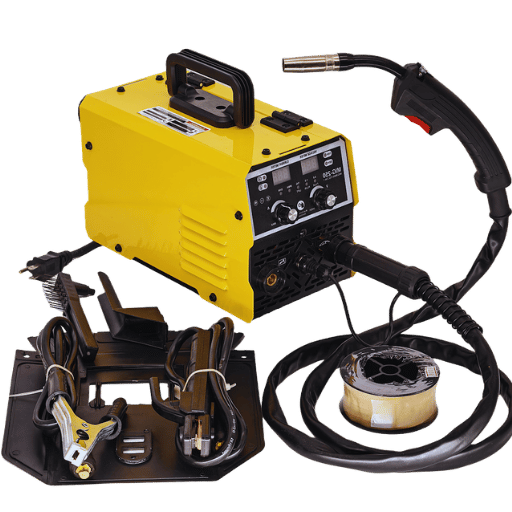
Key Advantages
- ✓
Affordability: Harbor Freight welders enhance accessibility at all levels, specialist or hobbyist, as they provide excellent payment alternatives that won’t break the bank. - ✓
Multiprocess Capabilities: All-in-one devices that integrate MIG, TIG, and stick welding into a single machine, rather than requiring several separate devices. - ✓
User-friendly features: Built purposefully with simplicity, while still maintaining the standards of crafting professional-quality works. - ✓
Complete Assistance: All your investments are protected with a warranty as well as available customer service for your peace of mind and worry-free investment.
Understanding Different Types of Welders
The beginning of selecting a welder highly relies on grasping different welding methods and techniques. With different methods, there are also advantages tailored for specific practices, materials, and even levels of skill.
| Type | Key Features | Pros | Cons | Best For |
|---|---|---|---|---|
| MIG Welding | Wire-fed, gas-shielded | Easy to learn, fast | Needs clean materials | Beginners, DIY projects |
| TIG Welding | Tungsten electrode | Precise, versatile | Hard to master, slow | Thin, delicate materials |
| Stick Welding | Electrode with flux | Inexpensive, versatile | Slag cleanup required | Outdoor, heavy repairs |
| Flux Welding | Flux-cored wire | Portable, no gas needed | More fumes, costly wire | Outdoor, rusty materials |
| Plasma Welding | High-precision arc | Clean, strong welds | Expensive, complex | Aerospace, thin metals |
| Gas Welding | Oxy-acetylene torch | Portable, versatile | Rarely used, costly gas | Cutting, brazing steel |
| Electron Beam | High-energy beam | Precise, automatable | Expensive setup | Medical, aerospace parts |
Features of the Vulcan and Titanium Series
Vulcan Series
- ●
Sophisticated controls enable precise modifications to digital parameters. - ●
Welding processes include Mig, Tig, and Stick. - ●
Rugged design and strengthened internal parts. - ●
Higher output for heavy and industrial uses. - ●
Interaction is simplified with self-explanatory controls. - ●
Safety is guaranteed with built-in, self-activated thermal overload protection. - ●
Compact and easily carried. - ●
Can be used on 120/240 volt supply dummy plugs.
Titanium Series
- ●
Technologies employing high-efficiency inverters offer improved capabilities. - ●
Optimized for Confined Work Area - ●
Work with Excellent Duty Cycle for Extended Operational Periods - ●
Enhanced if Installed Restrictions Set from 10-55 Amperes - ●
Easier Setup with Electrode Holder Switches and Less Than 20 Feet of Cables. - ●
Lower Operational Cost with Raised Efficiency - ●
Improved Protection for Interchangeable Protection System with Less than 0.5 Feet Safety Distance. - ●
Weld Protection Enhanced with Machine Manipulation System.
How Harbor Freight Tools Compares to Competitors
Like its competitors, Harbor Freight Tools caters to professionals and hobbyists alike but distinguishes itself by offering lower prices. While many competitors settle for price skimming by offering premium products and features, Harbor Freight has chosen a more economically prudent approach.
Performance: The Vulcan and Titanium series provide solid performance in welding applications at a fraction of the cost of higher-end brands.
Trade-offs: Some models may offer lower durability compared to industrial-grade tools from premium competitors. However, Harbor Freight Tools remains an excellent choice for users prioritizing affordability and practicality over premium materials or advanced features.
Which Welding Processes Are Best for Your Needs?
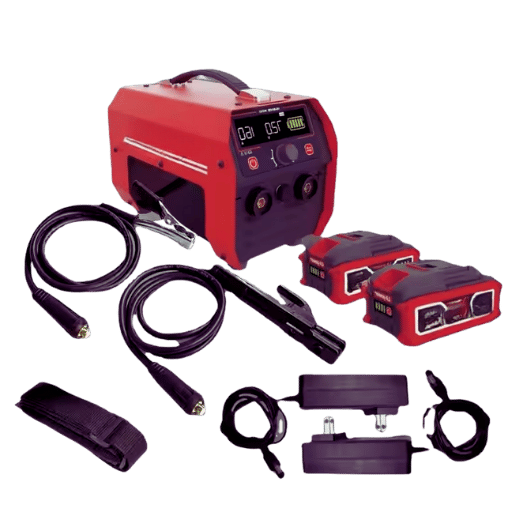
Exploring MIG, TIG, and Stick Welding
MIG Welding (Gas Metal Arc Welding – GMAW)
The ease of using MIG welding and its versatility make it one of the most popular welding processes. The process comprises the welding of a continuous solid wire electrode, which is fed through a welding gun and subsequently melted to produce a weld. The weld pool in its liquid state is protected from contamination from the outside by a gas supplied from outsid,e which may be an inert gas or a partially inert gas such as argon or a mixture of argon and carbon dioxide.
Key Features:
- Usability: Optimal for first-time users and novice welders due to its ease of use and uncomplicated functionality.
- Use: Predominantly used for the fusion of thin materials in the automotive, construction, and fabrication industries, including steel, aluminum, and stainless steel.
- Productivity: The machine is exceptionally productive due to its constant wire feed and increased welding velocity.
- Disadvantages: Derives the most benefit from a controlled working environment, as outdoor use is restricted due to the interference of wind and gas protection.
📊 Industry Statistics:
- MIG welding efficiency rates can exceed 80% in clean, controlled environments
- Accounts for nearly 50% of welding projects globally due to its versatility
TIG Welding (Gas Tungsten Arc Welding – GTAW)
TIG welding uses a non-consumable electrode made out of tungsten alongside a controlled atmosphere, usually gas shielding argon, to weld and augment protective shielding over the weld. Its application is most popular when a very intricate and superior quality weld is required due to the lack of final touch-ups.
Key Features:
- Accuracy and Mastery: Grants unparalleled mastery and control, thus perfect for delicate operations on thin sheets.
- Material Applicability: Compatible with numerous types of metals, such as aluminum, stainless steel, and even exotic alloys.
- Utilizations: Widely used in the aerospace, automotive, and art fabrication industries.
- Drawbacks: Takes much longer and is more difficult than other forms of welding, such as MIG, thus appealing to more skilled operators.
📊 Industry Statistics:
- Produces defect-free welds with minimal spatter, perfect for quality-critical industries
- Market shows an average growth rate of 5.4% for TIG welding equipment
Stick Welding (Shielded Metal Arc Welding – SMAW)
The very first type of welding, alongside the easiest, is stick welding. It employs the use of a consumable electrode which is covered in a flux to form a protective barrier to prevent oxidation and contamination in the welding area. Stick welding is very adaptable and can be used in different settings, including the outdoors and in remote areas.
Key Features:
- Durability: Ideal for outdoor use, and works on rusty and dirty surfaces, since the flux coating offers excellent protection
- Ease of use: Has the least amount of requirements, making it quite affordable and easy to use
- Usage: Commonly used for construction, heavy machinery repairs, and maintenance of other industrial equipment
- Weaknesses: Causes excessive spatter and slag, which tends to need more post-weld cleaning.
📊 Industry Insight:
Being an arc welding process of stick electrodes, stick welding offers robustness to heavy-duty applications under adverse conditions. It assists in welding thick materials that are not more than several inches in thickness, thus making it an infrastructure project requirement.
Comparing the Processes
| Welding Process | Best For | Advantages | Limitations |
|---|---|---|---|
| MIG Welding | Thin materials, indoor use | Fast, easy to learn | Limited outdoor usability |
| TIG Welding | Precision jobs, thin metals | High-quality, detailed welds | Slow and skill-intensive |
| Stick Welding | Heavy-duty, outdoor use | Durable and versatile | Excessive spatter, clean-up needed |
💡 Pro Tip: The choice of material, project scope, and site conditions are factors that must be decided upon when choosing the welding process. With each method presenting specialized advantages to meet particular needs, the result could be optimally achieved in diverse applications.
Choosing Between Flux Core and Shielding Gas Options
Flux Core Welding
- ✓
Ideal for outdoor work - ✓
Handles windy conditions well - ✓
No external gas required - ✓
Higher productivity demands
Shielding Gas
- ✓
Cleaner, more precise welds - ✓
Minimal spatter - ✓
Best for controlled indoor environments - ✓
Polished appearance for projects
Your decision ultimately depends on factors like project location, desired weld quality, and convenience. Consider the specific requirements of your work before making a choice.
The Role of Plasma Cutters in Multiprocess Welders
The multifunctional welders consider plasma cutters as an integral part owing to the precise and rich cutting capability of materials like steel, aluminum, and even brass. Plasma cutters operate with the use of electronics and generate a high-temperature plasma arc, allowing it to melt through the materials and provide quality, clean, and precise cuts.
Key Benefits: The addition of plasma cutting slices into the productivity of multiprocess welders, allowing rapid operator mobility between tasks, welding to cutting almost seamlessly. This ability shines the most when employed within varied fabrication and repair tasks, enhancing productivity overall and eliminating the need for ancillary equipment.
How to Choose the Right Multiprocess Welder from Harbor Freight?
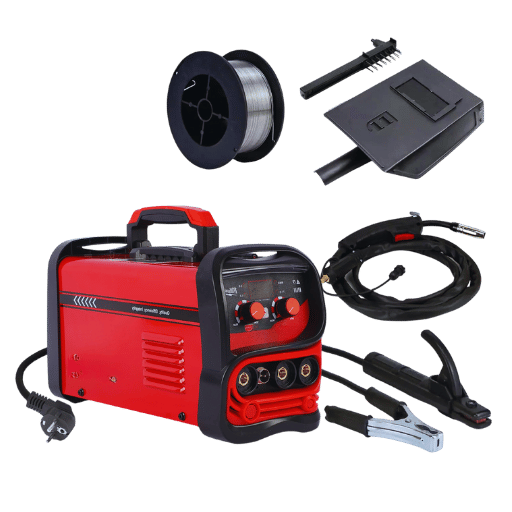
Evaluating Power Supply and Voltage Requirements
⚡ Power Considerations Checklist
- Witness the Electrical Connection: The infrastructure from the power source needs to meet the requirements of the welder used in the workspace.
- Measure the incoming Voltage: The options for incoming voltage can be unit at 120 volts for regular power sockets and 240 volts for more heavy-duty equipment and uses.
- Assess the Welding Requirement Necessary: The amount of welding and the materials for welding need to be thought out before planning the project.
- Versatility of Dual Voltage Input: Welders that can work on 120 volts and 240 volts are more flexible towards various welding applications.
- Confirm Compliance with power equipment: The line of equipment used should be cross-referenced to the manufacturer’s equipment to be sure it does not overload the power requirements needed.
Understanding Inverter vs. Transformer Technology
Choosing between inverter and transformer technology impacts your welder’s performance, portability, and efficiency. Understanding the differences helps you make an informed decision.
| Parameter | Inverter | Transformer |
|---|---|---|
| Function | DC to AC conversion | AC voltage adjustment |
| Input/Output | DC input, AC output | AC input, AC output |
| Efficiency | High | Moderate |
| Size/Weight | Compact/Light | Large/Heavy |
| Durability | Moderate | High |
| Applications | Solar, UPS, Electronics | Power grids, Appliances |
| Waveform | Sine/Square/Modified | Maintains input waveform |
| Cost | Lower upfront, saves power | Higher upfront |
| Technology Age | Newer | Established |
| Portability | High | Low |
Assessing Duty Cycle and Amperage Needs
When determining duty cycle and amperage requirements, it is essential to consider the operational demands of the equipment.
Understanding Duty Cycle
The term ‘duty cycle’ describes the amount of time an apparatus can run without overheating or failing to perform at an optimal level within the time frame. Consider an apparatus that can operate at 60% of its maximum angular velocity under a specific amperage. Such an apparatus can run for six minutes in a ten-minute time frame. After six minutes of running, the equipment needs a cooldown.
Amperage Requirements
The expenditure of an application dictates its electric power factor. In comparison to low amperage ratings that iWOFs their way into the swedging of CR 145, the industrial tools, machines, and/or activities become much more apparent with greater amperage ratings. As with the other parameters, the selected tools or machines need to have their duty cycle and active power rating computed to maximize system performance and system life.
What Are the Benefits of Using a Professional Welder from Harbor Freight?
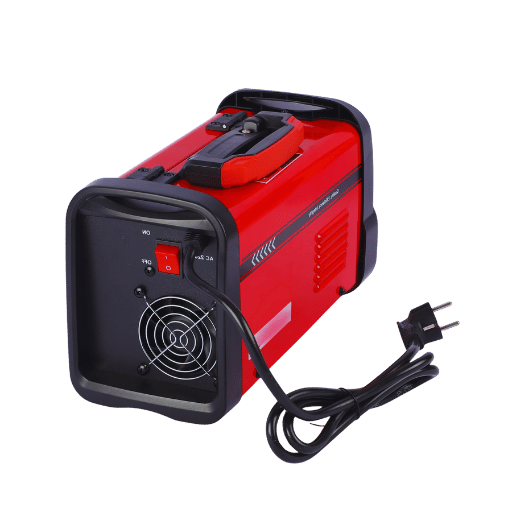
Enhancing Your Welding Experience with Harbor Freight’s Welding Machines
Harbor Freight’s professional welding machines are designed to deliver reliability, performance, and value for welders of all skill levels. These machines offer a range of features that make them stand out in the market.
Key Features:
- Customizable and automated configuration designs
- Robust construction intended for heavy and continuous use
- Ability to join dissimilar and similar materials such as steel, aluminum, and stainless steel composites
- Access schemes regardless of specialization level
- Poduction in several variants including MIG, TIG and stick welders
- Remarkably low cost without loss of functionality
Why Choose a Harbor Freight Welder for Outdoor Welding?
Outstanding Portability
Lightweight construction with handles or wheels makes transport to outdoor jobsites simple
Rugged Durability
Tough construction with weatherproofed components ensures operation in rough environments
Wind-Resistant Performance
Arc welding options like stick welders work well when it’s breezy, without gas shielding problems
Cost Efficiency
Proven dependability with great reviews coupled with inexpensive pricing ensures every wallet is happy
Maintaining Your Welder for Longevity and Performance
To maintain your welder for optimal performance and durability, follow these essential maintenance steps:
1. Clean the Welder Regularly
Proper airflow is critical to an operational welder, so ensure vents and wire feeds are blown free of dust and debris to avoid spatter accumulation and the risk of overheating.
2. Inspect and Replace Consumables
Contact tips, nozzles, and liners are prone to wear and in order to avoid gaps in welding performance, they should be replaced regularly.
3. Monitor Electrical Connections
Loose plugs should be tightened, and the cable checked for damage and fraying to avoid the risk of power loss or compromised safety.
4. Check Gas Flow and Hoses
Ensure shielding gas hoses are not damaged or leaking and proper gas flow is attained for optimal welds.
5. Store Properly
Moist or contaminated environments should be avoided as they may cause damage to the welder.
6. Follow Manufacturer Guidelines
Your specific maintenance timetable and instructions should be followed as outlined in the user manual for the respective model.
✅ Routine care and adherence to these guidelines will help extend the lifespan of your welder while ensuring reliable operation.
Are There Any Drawbacks to Harbor Freight Welders?
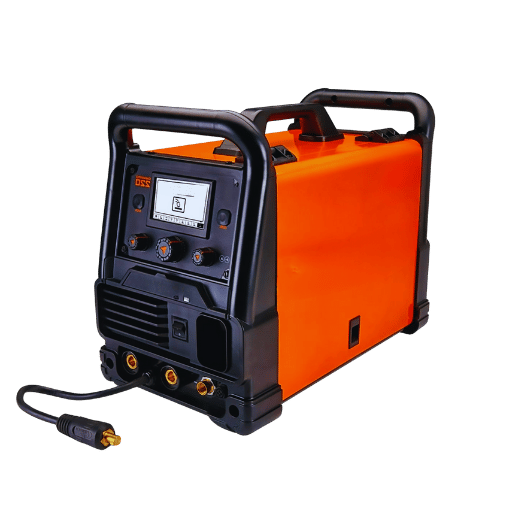
Common Issues with Chicago Electric and Inverter Arc Welders
Though Harbor Freight welders offer a wonderful value, there are certainly things to be wary of. Hence, you should always know its common problems so as to care for the equipment properly.
| Key Point | Chicago Electric | Inverter Arc Welders |
|---|---|---|
| Relay Issues | Frequent failures | Not applicable |
| Wiring Problems | Loose or broken connections | Loose connections |
| Overheating | Rare | High ambient temperature |
| Arc Instability | Rare | Polarity or gas flow issues |
| Output Current | Stable | No or low output current |
| Maintenance | Regular inspection needed | Clean terminals, check settings |
Troubleshooting Harbor Freight Welders
When troubleshooting Harbor Freight welders, the following common issues and their corresponding solutions can help resolve operational problems effectively:
⚠️ Relay Failures
Cause: Overuse or manufacturing defect
Solution: Replace the relay with a compatible part. Perform routine checks to identify early signs of failure.
🔌 Wiring Connection Problems
Cause: Loose or broken internal wiring
Solution: Inspect all wiring connections and ensure they are secure. Repair or replace any damaged wires.
🌡️ Overheating
Cause: Prolonged use in high ambient temperatures or insufficient cooling
Solution: Allow the welder to cool down between uses. Ensure that ventilation is unobstructed and fans are functioning properly.
⚡ Arc Instability
Cause: Incorrect polarity or improper gas flow (if applicable)
Solution: Verify polarity settings and adjust gas flow to recommended levels. Replace worn consumables if needed.
🔧 No Output Current
Cause: Faulty components or improper settings
Solution: Check all controls, terminals, and switches for proper position and function. If no issues are found, the unit may require professional repair.
📋 Important Note: Regular maintenance, such as inspecting and cleaning terminals and ensuring all machine settings are correctly configured, can significantly reduce the likelihood of these problems. Always consult the user manual for model-specific guidance.
Frequently Asked Questions (FAQs)
Q: Which welding machine best fits beginners at Harbor Freight?
A: The best Harbor Freight welder for beginners is typically the 120V flux-core welding machine under the Chicago Electric name. It is easy for a beginner to operate, moderately priced, and performs well for basic welding tasks. This basic stick welder serves as an excellent introduction to the welding process without overwhelming beginners with too many features.
Q: How do MIG welders work with various kinds of welding?
A: A MIG welder uses a continuous wire feed that creates an arc, melting the metal and filler materials simultaneously. This makes it suitable for welding on mild steel, stainless steel, and aluminum, making it a versatile choice for various projects. Flux core wire enables welding without using an external shielding gas, which becomes very useful for outdoor welding applications.
Q: Can I attach a spool gun to a MIG welder?
A: Yes, an optional spool gun attachment with a MIG welder is highly beneficial when welding aluminum or other soft metals. It allows for a smooth feed of wire while minimizing tangles and jams, which is perfect for precision welding jobs that require consistent wire delivery.
Q: What makes the Everlast Titanium MIG 140 a best choice?
A: The Everlast Titanium MIG 140 is a versatile all-purpose multiprocess welder capable of handling MIG, TIG, and stick welding processes. It works with a wide range of materials, including mild steel and stainless steel. Its portability, combined with great performance at an affordable price, makes it a wonderful choice for both amateurs and professionals.
Q: What are the benefits of a TIG welder?
A: TIG welding is renowned for creating high-quality and precise welds on thin materials. It is the preferred method in fabrication work involving stainless steel, titanium, and low-alloy steels. The precise control makes it ideal for architectural and intricate designs. As an added advantage, TIG welding uses inert gas, resulting in clean and strong welds.
Q: What is a multiprocess welder, and what are its advantages?
A: A multiprocess welder is a versatile machine able to provide services for different welding techniques, including MIG, TIG, and stick welding. This type of welder is extremely useful for anyone who works on many different materials and thicknesses, providing flexibility for particular projects. Purchasing a multiprocess welder is a smart investment that saves both space and money by combining multiple welding capabilities into one unit.
Q: Is a 240-volt welder needed for heavy-duty projects?
A: For heavy welding jobs, a 240V welder is typically necessary. It provides the power needed for demanding tasks and can handle thicker materials with much better precision than 120V models. Heavy-duty applications involving thick steel plates require substantial welding power for good penetration and strong welds.
Q: What should I look for when buying welding gloves?
A: When buying welding gloves, look for ones that provide heat resistance made from durable materials. The gloves should offer a good grip level compatible with some flexibility for handling the precision requirements of TIG or MIG machines. Ensure that the gloves are comfortable, especially for long welding sessions.
Q: How do you decide between a Lincoln or Miller welder?
A: Choosing between Lincoln and Miller welders often comes down to specific project requirements and personal preference. Both brands are widely considered reliable and of good quality. Lincoln welders might be easier for beginners to use, whereas Miller is usually preferred for enhanced features and professional applications. Consider the type of welding you will be doing and your budget to make the right choice.
Reference Sources
- Welding
- Top H Beam Production Line Manufacturer and Supplier in China
- Metropolitan Community College-Welding Technology Program
This program presents the study of welding technologies or the study of welding technology, which can include comparing or mentioning Harbor Freight welders.
Explore the program here