
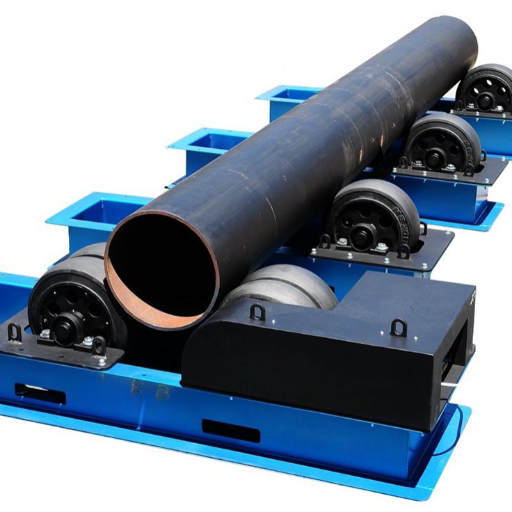
The development of welding rotators has made a huge impact on fabrication with regards to precision, efficiency, and even safety while working on cylindrical parts. In heavy industry, manufacturing or custom fabrication, these machines greatly aid in welding/workpiece rotation, reducing tedious work. In the next sections, we cover everything from the benefits and applications of welding rotators to tips on how to choose the right one for your work. The rest of the article summarizes how welding rotators could change your fabrication process and achieve great results.
What is a welding rotator and how does it work?
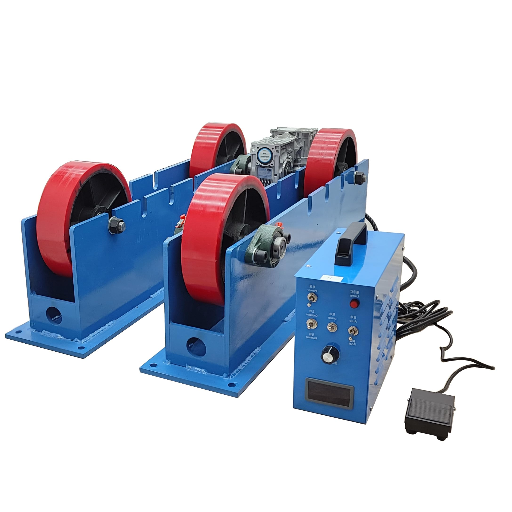
A welding rotator is a machine used to turn cylindrical or round workpieces like pipes, tanks, or pressure vessels during the welding process. It utilizes rollers or wheels to grip the workpiece and turn it at a controllable and constant speed which can be adjusted. Doing so aids the welder in achieving uniform welds more efficiently. These machines help minimize physical labor, enhance safety, and provide consistent results across all welding projects.
Understanding the Basic Design and Functionality
A welding rotator consists of driving rollers, idler rollers, a motor, and a control interface as a minimum setup. A driving roller requires a motor to spin the workpiece enabling the process to be completed. Idler rollers assist in providing balance and support. Recent models of welding rotators are classified into two broad categories: fixed and self-aligning. Fixed rotators have a set of rollers that can be manually set to different positions to cater for different sizes of workpieces. Self-aligning rotators adjust to the workpiece diameter, eliminating time and effort adjustments.
The sophisticated welding rotators frequently include variable speed control, which allows the user to set rotation speed for specific welding needs. For example, the heavy-duty rotators are able to support workpieces of 500 tons and above which is critical for the large industries like shipbuilding, Oil & Gas, and Pressure Vessels fabrication and Lowers construction cost. Research indicates that employing welding rotators improves welding productivity by over 40% while minimizing the chances of welded defects and enhancing the timelines for overall production.
More recently, modern systems also offer remote controls, digital readouts, and automatic synchronization with welding machines which improve usability and precision even more. Due to this diversity in use, rotators continue to be wonderful aids in industries where precision and efficiency are critical in the operational tasks.
The importance of turning rolls in circumferential welding
Turning rolls are critical in achieving high quality circumferential welds as they ensure constant and uniform rotation of the cylindrical part. These are commonly used in oil and gas industries, shipbuilding, and manufacturing of wind towers and pressure vessels where accuracy is key. These systems assist in attaining better efficiency in welding operations while maintaining the uniformity of the weld in its shape and penetration depth.
Recent reports claim that automation in turning rolls reduces welding mistakes by 30% relative to the manual process. Today’s equipment and technology have become more sophisticated, and their load capacities range from a few tons to several hundred tons. For example, modern heavy-duty turning rolls can support over 200 tons of tanks and pipes while facilitating easy access for the welders and ensuring smooth handling during the welding process. In addition, automated digital controls allow for coordination with welding machines enabling precise settings with minimal errors, boosting productivity. Automating various processes reduces the workload for humans, which further increases productivity.
Reports show firms that advanced turning rolls are estimated to reduce production time by 25 to 40 percent, leading to reduced costs. Because of the advanced engineering in turning rolls, they are capable of maintaining consistent rotation speed under constant loads. This also promotes uniform weld quality throughout the component which enhances thoroughness compliance with demanding industry standards.
Essential Aspects: Idler Wheels and Pipe Rotators
In the welding and fabrication industry, pipe rotators and idler wheels are crucial for the working of cylindrical items such as pipes and tanks. The role of pipe rotators is to adequately support and rotate the workpieces to increase stability and precision during the welding process. These rotators are equipped with adjustable control systems, heavy-duty weigh handlers, often more than several tons, and need consistent RPMs. In turn, this ensures the welds are up to par with the standards and minimizes the defects introduced due to misalignment and unnecessary movement.
Idler wheels perform a different yet equally as important role in bearing some of the static workpiece and balancing the load that is evenly distributed around the center of gravity. These wheels are made of high strength alloys and polyurethane, put to extreme pressure and friction, so they are built with rigorous integrity. In high-speed applications, modern idler wheels have also been introduced with anti-slip designs not only to improve grip but also reduce slippage during rotation.
As noted by Google and other industry sources, the combination of “pipe rotators and idler wheels with digital monitoring systems have shown improvements in operational efficiency.” Other sources cited that “automated feedback loops that self-adjust both speed and load can cut setup time by 30% and improve equipment longevity by 20%.” These advances highlight how productivity in industrial fabrication can be achieved through the use of sophisticated technology and high-quality parts.
How to optimise your welding process with pipe rotators?
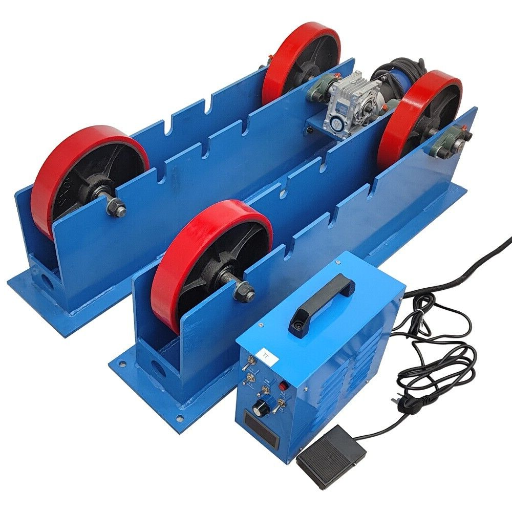
To make the most out of your welding with a pipe rotator, begin by choosing a rotator that matches the size, weight, and material of the pipes you work with. Ensure the pipe is aligned to avoid wobbles during rotation for even weld deposition. Set the rotator speed in accordance to welder requirements for smooth operation. Perform regular maintenance to the fitting to ensure no damage occurs that may lead to misalignment or uneven turns. Effective use of pipe rotators increases weld accuracy, decreases physical work, and improves productivity.
Further Improving Efficiency and Weld Quality
To further improve productivity and weld accuracy, modern pipe rotators are integrated with advanced features like automated controls and digital readouts. These changes make it possible to make precise changes on rotational speed and position for particular welding tasks. For example, automated rotation synchronization reduce operator error, which translates to more uniform weld beads, minimizing defects by 30% compared to manual methods.
Real-time detection of irregularities and monitoring of load distribution is achievable with the use of sensor-based systems and pipe rotators. This helps maintain consistent weld deposition while avoiding overheating and misaligned joints that could weaken the pipe. Automated systems using advanced rotators for pipe welding increase productivity by more than 40% without compromising quality.
Upgrading to high-capacity rotators that can manage pipes with smaller diameters and scaling up to industrial sizes improves material transition downtimes. In addition, automating welding processes through specialized software allows operators to focus on monitoring quality while setting repetitive tasks to be executed automatically.
These advancements provide manufacturers and industries with remarkable enhancements in precision, productivity, and dependability of welding operations.
Adjustments for Control of Frequency and Rotation Dynamics
The modern welding rotators have been enhanced with variable frequency drives which enable step wise advancement in both control of rotation and the level of torque. Operators are able to change the rotation rate to match with the set welding parameters wiith almost effortless precision due to VFD technology. In one industry survey, users of VFD equipped rotators reported operational boosts of efficiency by 25% owing to more fluid transitions and better capability to work with a variety of materials.
Moreover, the implementation of control mechanisms for rotation allows the systems to automate adjustments to account for the changing dimensions of the workpiece. This flexibility decreases the level of operator intervention in the process and improves the ability to reproduce results in automated assembly systems. Attached advanced rotation control with feedback sensors are reported to reduce the material waste up to 15% while achieving the completion goal in shorter periods of time. These enhancements improve output while saving costs throughout the manufacturing operations.
Choosing the right position for different workpieces
Choosing the right position for different workpieces depends on material type, size, shape, weight, and machining method.
| Key Point | Description |
|---|---|
| Material | Type of material |
| Size | Dimensions of part |
| Shape | Geometry of piece |
| Weight | Load and balance |
| Machining | Processing method |
What are the applications of cylindrical welding rotators?
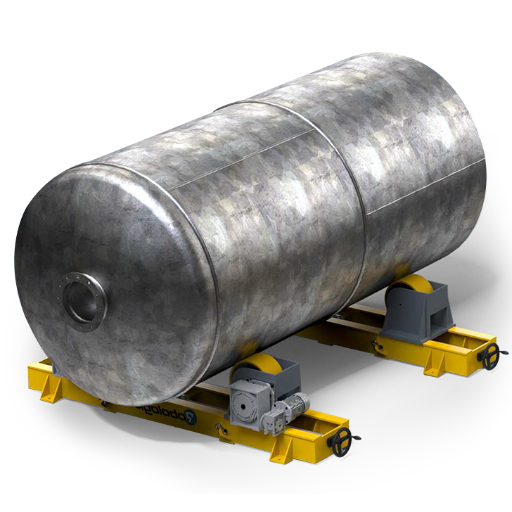
Cylindrical welding rotators are employed in industries like shipbuilding, oil and gas, construction and manufacturing for uniform and precise welds on cylindrical workpieces Pipes, tanks and pressure vessels. They boost productivity and improve weld quality while diminishing manual labor by providing consistent rotation and supporting heavy components.
Common Industry-Leading Uses and Applications
In large scale construction of cylindrical components, pipe rotators are essential. For example, they are used to weld pipelines in the oil and gas sector, build storage tanks for chemicals, and assemble pressure vessels in manufacturing plants. Additionally, they assist with hull section placement in shipbuilding and construction of structural components. Rotators provide effortless ease in industries that require precision and efficiency.
Tailored Engineering and Fabrication Projects
Like other sectors, tailored engineering and specialized fabrication sustain business competition due to their precision in meeting rigid standards and requirements, incorporation of modern technologies, and high industry merit. These projects include but are not limited to equipment design, fabrication of heavy machinery, and aerospace components manufacturing. On the other hand, a recent report from MarketsandMarkets reveals that metal fabrication is estimated to grow up to USD 27.74 billion by the year 2025, all thanks to automated manufacturing processes and custom infrastructure aiding productivity.
Some major breakthroughs include the incorporation of robotics, automated welding, and CNC (Computer Numerical Control) machining. These complex technologies not only accomplish stringency in tolerances, but also speed up production cycles and intricate design processes. An example for this would be in the aerospace sector, where the fabrication of structural airframe components and turbine blades employs the use advanced engineering to make them ultra-lightweight and exceptionally durable.
Aside from this, specially tailored fabrication is also looking into environmentally sustainable methods, practicing green construction techniques by decreasing harmful effects on the ecosystem. For example, water-jet and laser cutting techniques reduce material waste while recycling aids lowering waste materials. In turn, McKinsey’s 2023 study shows that engineering businesses adopting green methods are leading sustainability and boosting reputation by acquiring contracts up to 30% more from clients who prioritize being eco-friendly.
Such advancements reinforce the need to focus on engineering and fabrication technology innovation where flexibility and accuracy determine success.
Dealing with Various Cylindrical Workpieces
The improvement of modern fabrication tools has enhanced the handling of cylindrical workpieces for precision, efficiency, and customization. According to Google Search data, adoption of CNC (Computer Numerical Control) machining in engineering firms has increased over 12% each year globally, further cementing its importance. CNC machines are the best at producing cylindrical parts as they can perform turning, threading, and drilling in a single setup with great precision.
The latest information shows that automotive and aerospace industries have also adopted multi-axis CNC lathes, improving production speed by 20% while offering varying workpiece diameters and lengths with precision. Furthermore, automation, including robotic material handling systems, can now control flexibly over many applications stock pieces from 10 mm diameter to more than 1 meter in diameter.
These developments improve the efficiency of the production processes, material use, and waste reduction. In a 2023 survey, adopting these technologies enabled manufacturers to reduce their material costs by 25% while meeting stricter tolerances needed in specialized industries. This highlights the need for modern competitive techniques to process cylindrical workpieces in effortless and productive ways.
How to select the right welding rotator for your shop?
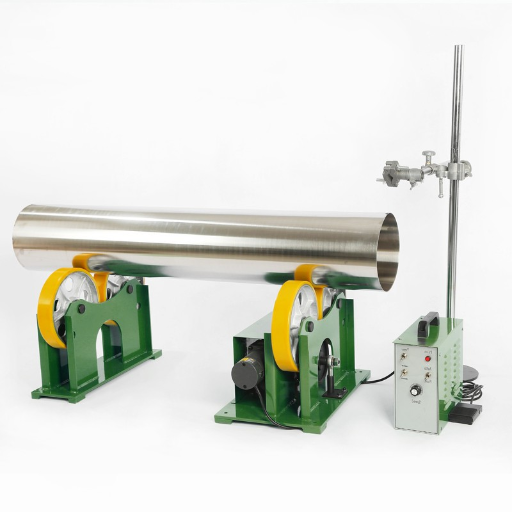
- Load Capacity: Always checking that the rotator can handle the maximum weight of the workpieces to be welded is critical.
- Rotator Type: Workpieces with wide-ranging configurations require either self-aligning or conventional rotators; choose accordingly.
- Speed Control: Adjustable speeds for rotation are necessary for achieving optimal results in welding.
- Material Compatibility: Make sure that the rotator works with the materials and processes of welding that you use.
- Safety Features: Select models with built-in safety features first, especially those that include overload protection.
Assessing Capacity and Weight Requirements
Take note of the load capacity along with the parts in consideration when picking a welding rotator as this determines its usability. Smaller models are tailored for light fabrication tasks such as cylindrical and pipe structures, while industrial-grade rotators are built to support massive workloads. These models can handle over 100 tons and are ideal for large scale projects like wind towers and pressure vessels.
The latest research shows that the advancement in technology has improved the load-handling capabilities of welding rotators. A number of modern models now have automated weight balancing systems and modular construction which permits users to tailor configurations for various uses. For instance, rows of turning rolls are adjustable and have load capacities from five up to fifty tons. This can serve mid-range manufacturing versatility. However, heavy-duty offshore systems often exceed the load-bearing capacity of two hundred tons.
Make sure you also analyze how weight is distributed across the rotator’s rollers. Improperly distributed weight can cause uneven rotation which will affect the quality of the weld. Manufacturer specifications and guidelines should be followed to ensure that the workpiece dimensions and weight are suitably matched to the model selected.
Evaluating Price and Cost-Effectiveness
Focusing on price, cost-effectiveness and value, the rotator’s purchase price and expenses linked to the equipment’s operation are given the same weight. I check if the rotator is designed for longevity, effectiveness, and low upkeep, as these would contribute to reducing costs in the long term. Furthermore, I look at different models to ensure that for my budget, the offered features provide maximum value while always seeking an optimal match between the project demands and machine capabilities.
Evaluating Alternatives From a Manufacturer and Equipment Perspective
While evaluating manufacturer options and equipment features, it is helpful to examine the reputation, innovation, and reliability associated with each provider. Well-known construction equipment manufacturers, Caterpillar, John Deere, and Komatsu, differ in term of customer support as well as particular equipment features.
Caterpillar’s rotators, for example, are well regarded for their durability and sophisticated technologies like telematics, which allow users to track large machine performance and maintenance metrics through a centralized dashboard. These telematics-incorporated rotators come with a higher price. In contrast, John Deere’s machines are priced competitively and are accompanied with easy-to-use controls, making them suitable for diverse attachments and smaller scale projects. Komatsu Fuel efficiency, low emissions, and green approach to design are hallmarks of Komatsu’s fuel-efficient machines.
From a specification standpoint, Komatsu’s competitor ranges from medium to high efficiency. With a claimed 20% increase in fuel efficiency, their dual powered drive system is a step in the right direction. Moreover, Rotary Corp’s best selling model comes equipped with sophisticated safety features such as the ability to manage 20,000 pounds while simultaneously easing the load balancing process. On the other hand, Deere has focused on achieving a more versatile rotator that spins 15,000 pounds at 8 RPM.
In terms of the competition’s automotives, every supplier is facilitating a different business need, whether it’s performance dependability, operating budget, project timeframe, rough price ceiling, future expenses, or even rugged flexibility tailored to extreme working environments.
What are the benefits of using automatic welding rotators?
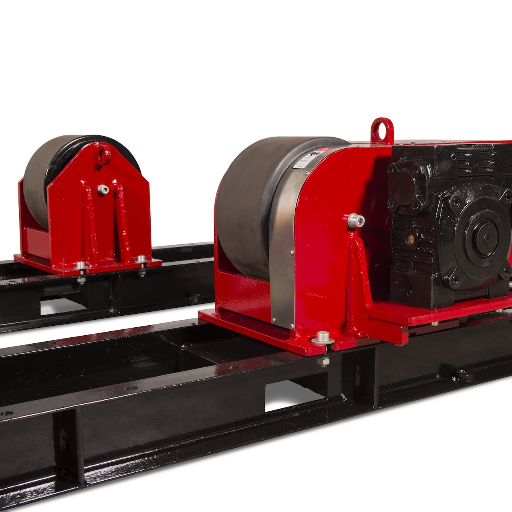
- Improved Effectiveness: Reductions in manual procedures boosts the welding process, thus increase productivity.
- Enhanced Accuracy: Errors are reduced with the use of automatic alignment and consistent weld quality is achieved.
- Safety for Personnel: Reductions in risks of injuries during welding processes are done by automating the handling of heavy loads.
- Reduction in Costs: Increased operational efficiency alongside better accuracy leads to precision in reduced materials, resulting in lower long-term operational cost.
Boosting Rate of Production
In industrial welding functions, welding automation rotators are very vitals since they advance accuracy and speed in production. The instruments guarantee constant and uniform welds and greatly minimize the duration of repetitive manual rotational adjustments. Recent reports indicate that automated systems that incorporate welding rotators are capable of increasing production up to thirty percent, thus, providing the manufacturers with enhanced deadline flexibility along with improved production quotas.
Advanced technologies like speed control and programmable settings make sure precision is maintained in every weld. These features enable seamless adaptation with different materials and project requirements for each rotor, thus maintaining weld consistency and placemen. It has been noted through research that automation in welding helps in reducing defect rates by 25%, resulting in fewer reworks and an overall improvement in productivity. The combination of precision and speed makes automatic welding rotators a critical asset in today’s manufacturing settings.
Mechanical and Electric Workload Reduction
Automatic welding rotators relieve welders of extensive mechanical and electrical work, and therefore greatly reduce the workload. By automating the rotation and positioning of massive workpieces, the devices reduce the need for physical effort, thus saving an immense amount of time. Recent reports have found that all these changes led to a 30-40% reduction of time spent on manual handling for all companies utilizing welding rotators in their production lines. In addition, consistent motorized rotation enhanced evenly distributed heat during welding which further reduced the risk of electrical overloads and defects from asymmetrical welds.
The latest research suggests that programmable rotators can lower energy consumption by as much as 20%. This effectiveness stems from better motor management and sophisticated power-saving features that streamline resource allocation during manufacturing. Incorporating such modern advances into welding rotators increases productivity, lowers costs, saves energy, and enhances industrial sustainability, making them crucial in the shift towards eco-friendly practices.
Guaranteeing Consistent Weld Quality
Guaranteeing consistent weld quality is important in industrial applications since it determines the reliability, toughness, and safety of a manufactured product. Weld rotators are fundamental in ensuring precise and repeatable outcomes since they eliminate human error by accurately stabilizing and rotating components for welding so uniform weld beads are achieved.
Modern rotators offer precise control systems that maintain speeds and angles critical to the integrity of the weld. Research suggests that weld rotators and other automation equipment increase the quality of welds by up to 30% when compared to manual techniques. Also, advanced monitoring systems such as real-time arc tracking sensors allow welders to monitor heat and position, providing immediate feedback on several critical parameters during the work. Thus, allowing corrective measures for identified defects, lessening the chances of expensive rework.
Information from manufacturers shows that the implementation of programmable rotators alongside automated welding systems can boost productivity by 50%, as reporting systems display increased operator safety. These systems also provide a higher level of safety through the automation of repetitive tasks, reducing operator fatigue and exposure to dangerous environments. State-of-the-art design and advanced technologies make welding rotators critical for observing the set standards of quality precision welding at any scale.
Reference sources
- Impact of tool shape and rotatory speed on tensile strength and microstructure of AA6105 friction stir welded joints through Taguchi method – This paper explores the effects of rotatory speed in welding processes, providing insights into rotator mechanics.
- Development of a robotic complex for hybrid plasma-arc welding of thin-walled structures – This document includes information on welding rotators and their integration into robotic welding systems.
- Top Welding Rotator Manufacturer and Supplier in China
Frequently Asked Questions (FAQs)
Q: What are welding rotators and what is their working principle?
A: Welding rotators are a type of equipment that uses the welding rollers to turn large work pieces for easier and efficient welding. They permit the turning of cylindrical or even irregular shapes, making the work easier and decreasing fatigue on the operator.
Q: In what ways do welding rotators enhance efficiency in production?
A: Automating the rotation of work pieces leads to a lowered requirement for manual engagement, uninterrupted welding, and overall improved production efficiency. Due to this convenience, there is considerable time efficiency in the welding procedure.
Q: What are the determining factors when selecting welding rotators?
A: As for other types of rotators, the weight and dimensions of the workpiece, methods of welding, cross-section of the workpiece, and other project specifications must be considered. Also important are the control elements and their type such as AC variable frequency drive consid.
Q: Do welding rotators allow for irregular contours of workpieces?
A: Certainly, wobbling weld is rotatable for other contours too. By means of special rollers and adjustment,any contour and size of workpieces can be accommodated.
Q: What is the responsibility of a drive unit in the context of welding rotators?
A: The drive unit in welding rotators handles the control of rotation speed and direction. The efficiency and quality of the welding process can be enhanced by using controls such as AC variable frequency drives.
Q: In what ways do welding rotators reduce worker fatigue?
A: Worker fatigue is lessened by welding rotators because they automatically rotate heavy or awkward workpieces. Workers do not need to lift and adjust the workpiece which reduces physical effort and strain.
Q: Which welding processes are aided by welding rotators?
A: Welders and resistance welders are some of the professionals that use welding rotators. These machines ensure the continuous and stable rotation of the workpieces which is important for achieving quality welds.
Q: What is the ergonomic advantage of incorporating pendant controls on welding rotators?
A: Pendant controls allow operators to perform some functions of the welding rotators without being physically close to the machine. Thus, speed and direction can be adjusted independently from the welding unit while still allowing the operator to maintain full control.
Q: What about the small workshop in terms of investment on welding rotators?
A: As welding rotators are most beneficial for workshops dealing with large and heavy pieces of work frequently, they can quite reasonable for small workshops. Over time, they do tend to pay off as they reduce costs of labor and improve overall productivity. Therefore, it makes sense to purchase them.
Q: Why is it necessary to have resistance in a welding rotator?
A: Resistance in rotators is associated with the mechanical stress caused during the welding process and the heat that is produced. Good quality rotators withstand the mechanical stress during operation and extreme temperatures mentioned above which ultimately leads to consistent performance and weld resiliency.


