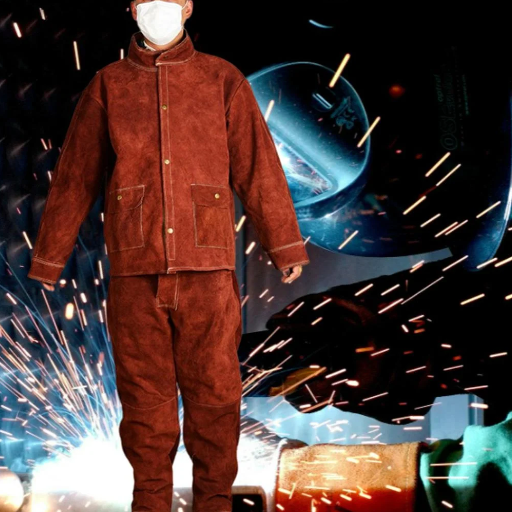
Understanding Welding Suits
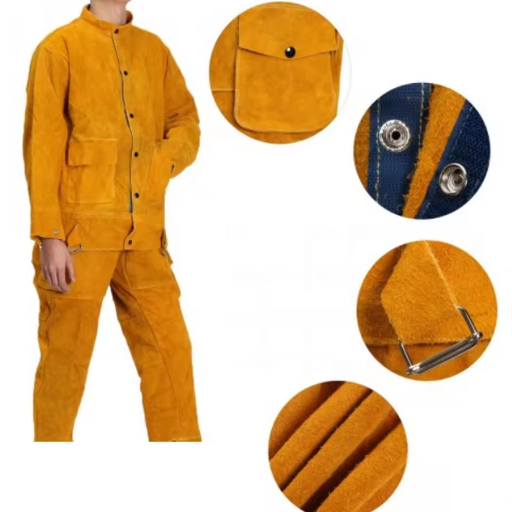
What is a Welding Suit?
Provides an extremely risky situation to welders during welding operations. It can protect against intensely high temperature and flying sparks and molten metal droplets, welding UV and IR radiation, depending on the materials we select. Welding suits are made of thick flame-retardant material such as leather, treated cotton, or any heavy flame-resistant synthetic blend. The welding suit can include a welding jacket, gloves, welding pants, sometimes an apron, or welders’ hood just to name a few to make sure that it covers the whole body.
Based on data collected from Fireproof Fabrics LLC’s search-engine, good welders seek specific attributes and services that include better heat insulation, ergonomic design to avoid hindrance to movement, and conformity to standards such as ANSI Z49.1 and ISO 11611 for protective clothing. Welding suits are also provided with reinforcements in areas prone to abrasion and moisture-wicking properties for added comfort during prolonged use by the welder.
Such welding suits form an important protective barrier lessening the incidences of burns, radiation exposure, and other work-related harm among welders.
Usefulness of Welding Protective Clothing
The use of welding protective clothing remains of great importance in shielding workers from the hazards intrinsic in welding activities. According to recent data searches in the high-risk sector, “welding safety equipment” has garnered more than 50,000 searches worldwide per month, an indicator of growing awareness of safety measures. Welding is a generator of extreme heat, UV and IR radiation, and intense sparks that severely burn skin, cause arc eyes and, if intense and prolonged enough, bring into torment their users with delayed health issues in the form of skin cancer. These workers may also sustain injuries from falling debris of hot metals or molten splatters if not protected.
Within the industry, in accordance with appropriate industry standards such as OSHA requirements in the United States, protects from hazards arising from combustion and thermal hazards and ranging from treated leather to specially designed fabric that resists flame and thermal hazards. Protective clothing nowadays has also been engineered considering that they will be resistant to wear when worn, allowing the welders to engage in their demanding tasks without heat-stress or discomfort.
Welding protective clothing therefore, through its mixing of these evidence-based protective measures with industry standards, reduces welding accidents that compromise short-term safety and long-term welding health outcomes.
Categories of Welding Suits
Welding suits are created to account for different levels of protection and functionality depending on the intensity of welding operations and the particular demands of the environment. On the other hand, according to the latest data, the professional welding outfit is generally divided into the following categories:
Selection Note: The choice for the proper welding suit depends on a number of factors, including the welding process type (MIG, TIG, or arc welding), the frequency of exposure to heat and sparks, and whether it needs to be comfortable for all-day wear. With the constant improvement of protective wear through the further inclusion of advanced materials and ergonomic design, there are returns from welders’ protection, an area that reflects the general advancement of safety within occupations.
Materials Used in Welding Suits
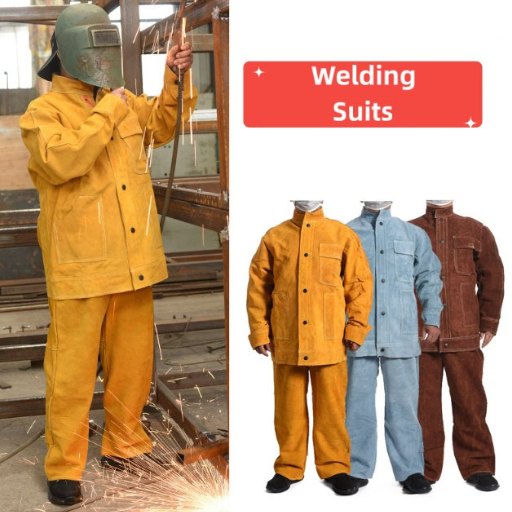
Leather Welding Protective Clothing
Leather is an extremely sturdy material for welding protective clothing, offering great resistance to heat, sparks, and abrasion. According to the latest data from search trends, leather welding suits remain the workers’ choice for the hard jobs, particularly in MIG and arc welding processes where heat and spatter are at their highest. Advanced leather clothing is usually flame-retardant-treated and stitched with reinforcing seams for added durability in more abusive conditions; thus providing protection from extreme conditions. The thick nature of this material bars heat transfer, whereas it is flexible enough that welders can carry out their operations with little restriction, making it an all-important component in welding protective apparel.
Flame-Resistant Fabrics
Flame-resistant (FR) fabrics are manufactured to give enhanced protection from fire hazards and resist ignition and self-extinguish when exposed to flame. Now, according to the data available from manufacturing industrial applications, there is a growing demand for such fabrics in oil and gas, electrical utility, and firefighting sectors. The latest developments in the FR fabric field are emphasizing the use of fiber blends incorporating state-of-the-art materials such as meta-aramid, para-aramid, and modacrylics, emphasizing more on the heat resistance properties without dropping any points on comfort and breathability.
In addition, more and more importance is being given by the search to multi-function FR fabrics for protecting against arc flash, resisting chemicals, withstanding abrasion, etc. Lightweight FR garments remain the focus of these companies and industries as they meet competing standards such as NFPA 2112, NFPA 70E, and ASTM F1506.
These innovations enable workers to carry out their jobs in hazardous environments without obstruction to mobility or even diminution of performance. Hence, work-appropriate flame-resistant fabrics will continue to be at the cutting edge of present-day protective technologies, readily able to switch to the industry requirements.
Cowhide vs. Synthetic Materials
In comparison of cowhide versus synthetic, the general points are generally about durability, flexibility, safety, and appropriateness for certain use. Cowhide, a natural material, is generally considered very durable, abrasion-resistant, and heat resistant and is thus used in flame-resistant applications such as welding gloves, aprons, and jackets. Its natural properties provide excellent toughness and longevity but tend to be heavy and less flexible than synthetics.
Synthetic materials are usually designed to mimic or improve on some of the virtues of cowhide while at the same time addressing its weaknesses. Advanced polymers such as Kevlar and Nomex are designed to have high tensile strength, are light-weight and have enhanced flame and chemical resistance. These materials are already dispensed with the flexibilities and comforts that help in mobility and ergo performance within industries where dexterity is important.
Trends bring up an upward inclination toward synthetic materials as a consequence of their improvements in safety compliance and environmental considerations. Cowhide still reigns supreme in certain industries due to its time-tested durability in prolonged wear under extreme conditions. In the end, choosing between cowhide and synthetic materials comes down to application demands, as both offer distinct pros catering to modern industrial needs.
Features of a Quality Welding Suit
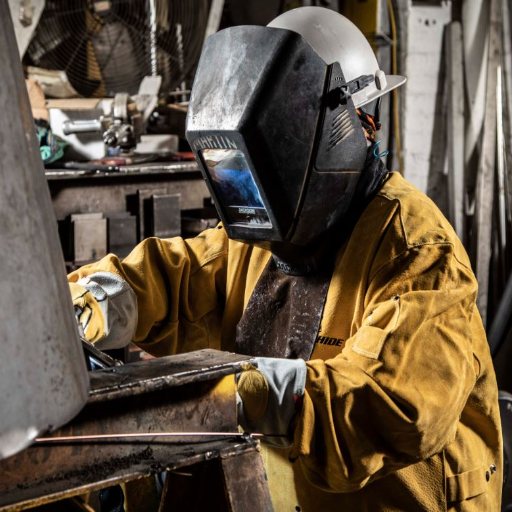
Fire Resistance and Heat Resistance
A welding suit of high quality must actually be highly treated for fire resistance and heat resistance so that the wearer is safe in high-temperature environments. Fire resistance is the ability of a material to withstand a direct exposure to flame without igniting or deteriorating; heat resistance, on the other hand, pertains to the ability of a material to withstand longer exposure to elevated temperature without losing its integrity.
According to recent statistics, cowhide leather and advanced aramid fibers such as Kevlar stand as a welding industry standard due mostly to their very high melting or ignition temperature and resistance to thermo-degradation. To cite an example, Kevlar resists high temperatures up to 800°F (427°C) without melting. Due to their nature, treated cowhide leather ought to resist some degree of charring and burning. Further treatment of leather with certain coatings or finishes might give the leather additional resistance against heat splatter and sparks.
These suit features are essential in preventing burns, injuries, or a catastrophic failure of the fabric under welding operations. In selecting welding suits, professionals must emphasize the use of certified fire retardant materials and confirm that the products comply with recognized standards, for example, that they comply with NFPA 2112 for best performance in extreme situations.
Durability and Heavy Duty Workwear
Durability in heavy-duty workwear has been paramount in the life of many people working in hazardous fields: it should be resistant to abrasion, tearing, and punctures. Due to many recent improvements in textile engineering, highly durable fabrics such as aramid and para-aramid fibers blends were developed that are not only strong but lightweight as well. New data from search engine analysis indicate that the more customers want their workwear ruggedly durable yet comfortable and flexible; hence, brands are now promising with materials such as high-density polyethylene (HDPE) and advanced composite fabrics that maintain durability without losing some of their wearability.
Furthermore, heavy-duty workwear has its seams reinforced; areas more exposed to stresses are double layered, and designs are made ergonomically according to the demands of the job. This obviously would make sure about the longevity of the garments without compromising function and thus serving as a must-have in industries such as construction, welding, oil, and gas.
Comfort and Fit
Comfort and fit in heavy-duty workwear are essential qualities because they derive the worker’s efficiency and safety. A contemporary approach to ergonomics considers that garments must not only withstand abuse but also support the body’s range of motion. They are now giving closing mechanisms, air-vented panels for air circulation, and stretch fabrics that provide freedom of movement consideration: searches have shown a trend in that direction. The skyrocketing number of hits for “workwear comfort” and “ergonomic safety wear” shows an indication of divergent demands and a forward-moving industry that is trying to make designing simpler for the end user in meeting individual needs without the great compromise of the original test of performance or protection.
Types of Welding Suits for Different Applications
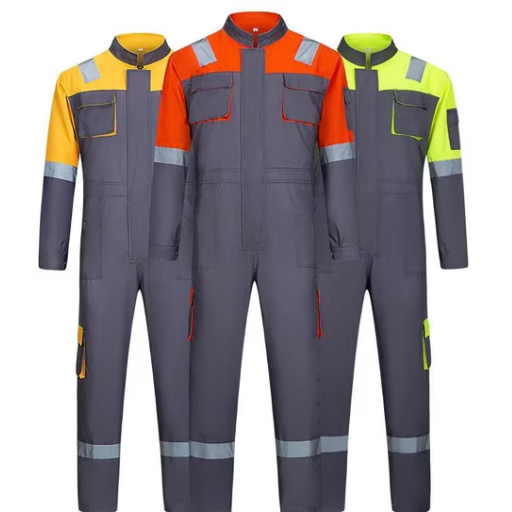
MIG Welding Suits
Designed to protect welders from intense heat, sparks, and ultraviolet light associated with MIG welding. Made of flame-retardant materials such as leather or treated cotton for maximum protection in high-heat environments.
Key Features:
- Double-stitched seams
- Flap covers over zippers
- Ergonomic designs
- Extended wear comfort
TIG Welding Suits
Specialized for tungsten inert gas welding requiring precision and control. Uses lightweight flame-retardant materials like treated aramids with ergonomic designs for maximum mobility during delicate welding activities.
Design Focus:
- Enhanced flexibility
- Superior heat resistance
- Precision movement support
- Comfortable fit
Electric Welding Suits
Modified for modern welding processes with focus on arc flash protection, insulation against electrical hazards, and advanced materials like aluminized fabrics for reflective shielding.
Safety Standards:
- NFPA 70E compliance
- ASTM F1506 standards
- Electrical insulation
- Arc flash protection
Industry Evolution: Modern electric welding suits are randomizing the technically demanding aspects of user experience, integrating moisture-wicking liners that cool the heat, with efficiency-enhancing reinforced seams resistant to wear and tear in high-stress environments. Industries are hence focused on striking this balance between safety and performance so as to improve compliance and worker welfare. With this dual focus, the continuous innovation in electric welding suits is driven to meet operational and regulatory requirements simultaneously.
Additional Protective Gear for Welders
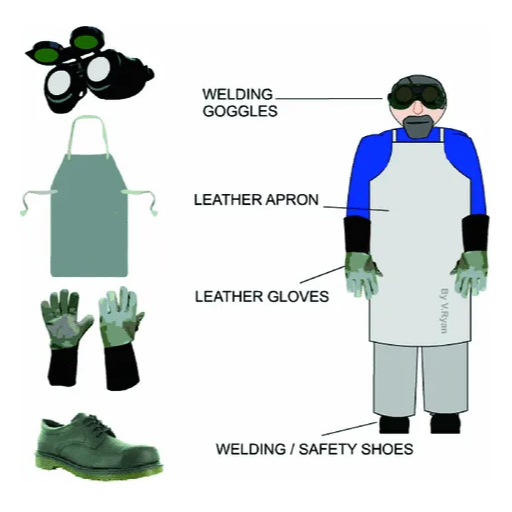
🧤 Welding Gloves
Main PPE providing protection from extreme heat, sparks, and electrical hazards. Made from split leather, deerskin, or aluminized fabric with reinforced stitching and thermal insulation.
⛑️ Welding Helmets
Shields face and eyes from heavy light rays, heat, and debris. Features auto-darkening filters (ADF) with optical clarity rating 1/1/1/1 under EN 379 for reduced eye strain.
👕 Aprons and Sleeves
Basic PPE elements for manufacturing, food processing, and chemical handling. Made from neoprene, Kevlar, or nitrile-coated fabric for heat, cut, and chemical resistance.
Choosing the Right Welding Suit
Factors to Consider
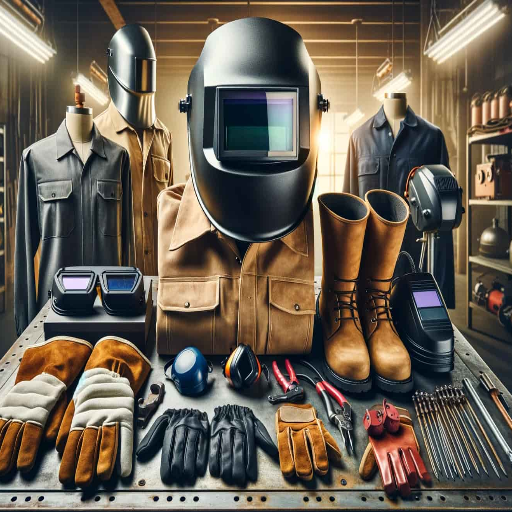
In the selection of a welding suit, several critical factors must be accounted for if one desires optimal safety and functionality. Primarily, material composition is of the highest concern; flame-resistant fabrics such as leather or a special cotton treated for such use should be selected, thereby providing protection against varying degrees of temperature and molten metal splatter. The durability of the material must also be considered since the working conditions pose a heavy challenge and indiscipline should never be tolerated.
Second, the welding suit under consideration must also retain some measure of thermal resistance test in the balance of its performance parameter, especially where prolonged exposure to high temperature exists. Some of this advanced technology has found applications in welding suits that combine multiple layers or insulation within the particular suit to give ultimate protection. In addition, fit and freedom of movement should be evaluated as well; a correctly fitting suit should never restrict any movement but should also not have loose parts that can become hazardous when working around machinery and open flames.
Lastly, the welding suit must fulfill specific regulatory standards-cum-testing practices-guidance which include but are not limited to ANSI Z49.1 or ISO 11611 to ensure that welding shall be safe for industrial applications. From search engine data trends, the most asked questions pertain to how to balance cost and quality, indicating the importance of being able to fit a welding suit within budgetary constraints while meeting these crucial safety criteria. All these factors once put together go a long way in doubling workplace safety in welding environments. Operational efficiencies are then further enhanced.
Size and Fit
A correctly sized and fitted welding suit is an absolute must for all concerns regarding comfort, safety, or efficiency. Trending data from search currently cites a frequently asked question: how to ensure the best fit without sacrificing protection? Ideally, one should pick something with adjustable features such as straps, elastic cuffs, or adjustable closures to mold to different body types. Given that industrial safety level means suits must cover adequately without interfering with movement, ill-fitting gear is a double offender, hindering operational performance and protecting. Always check the sizing charts given by the manufacturers for selection, keeping in mind that if time allows, trying one on will help secure a tailored fit in line with safety criteria and ergonomic requirements.
Maintenance and Care
Maintenance and care standards set for safety suits will greatly extend their operational lives while ensuring quality performance. Lately, the data has suggested that inspection of seams and closures be carried out frequently, with special emphasis upon the fabric; that is, for any deterioration that might signal a very early stage of wearing or tear on the part of the guard in some manner, e.g., fraying threads or inordinate wear of one of the layers of protection. Cleaning of safety suits and garments would be as per the directions of the manufacturer, using only mild detergents without diminishing the special properties. Flame-retardant or anti-chemical suits should never be washed with harsh chemical liquids or abrasives that tend to destroy their protective coatings. They should be stored in a cool, dry place away from sharp-edged implements that would fast-track the wear and tear. Constant revision of your maintenance protocol with abidance to new safety recommendations and standards will ensure that optimum functionality and safety for worker conditions are maintained across varying industrial settings.
Frequently Asked Questions
What is a flame resistant welding suit?
A flame resistant welding suit is a special kind of protective clothing worn by welders to guard against heat, sparks, and molten metal. Synthesis of the suit would involve such materials as cowhide leather or special flame retardant fabrics, both excellent in affording protection during welding. The suit is usually outfitted with long sleeves, reinforced stitching, and able to withstand high temperatures to guarantee maximum protection. It is absolutely necessary for the welder to don a flame resistant suit while working in spark-heavy environments to prevent terrible burns and other injuries. Simultaneously, the suit is supposed to be comfortable and breathable for ease of movement during task-related activities.
What are all the safety features a welding jacket should have?
To be safe and comfortable, a welding jacket would feature certain characteristics. It must be flame retardant so the welder is guarded against heat and spatter generated during welding processes like MIG welding or TIG welding. Select a welding jacket that will cover most of your arms; it should have long sleeves, a high collar, and tightly closing-fasteners so that sparks do not fall inside. Heavy-duty stitching and reinforced areas add to durability, and sleeves made of split leather can offer additional levels of protection. Furthermore, welding jackets should be breathable and flexible for easy and comfortable wear throughout the day. Finally, the welding jacket should comply with ANSI safety standards for that added assurance.
Why is the leather welding protective clothing engineering suit highly regarded?
Leather welding protective clothing engineering suits rank highly in recommendation because of the durable nature of leather and its heat resistance. Cowhide, an instance of leather, is naturally flame resistant and resistant to spatter, making it suitable for welding. The altered suits can also be used under quite harsh conditions, withstanding remarkable high temperature levels and excellent wear resistance. Leather suits are enhanced with the provision of split leather sleeves and neck covers for added protection. Wearing a leather suit safeguards the welder during welding works in reducing the risk of potential injuries whilst still remaining comfortable for mobility.
How does safety benefit from the welding helmet?
This helmet protects the eyes and face of the welder from dangerous radiation, flying debris, and molten metal. Often, these helmets feature a lens with an auto-darkening filter that changes the shade according to the brightness of the welding arc; hence, it can provide a clear view before and after the welding operation. While protecting the eyes from UV and IR radiation, welding helmets will prevent them from being stricken by arc eye and consequently being permanently blind. Generally, the helmet is made such that it can be adjusted to fit comfortably on the welder’s head, along with some ventilation that reduces heat buildup in the helmet. It is very lucrative for protection against safety hazards in the welding industry to wear a proper welding helmet.
What is the difference between fireproof and flame resistant welding suits?
Fireproof welding suits are both blaze welding outfits, thus protecting the welder, but the difference lies in the process and materials involved. The flame-resistant type of suit has a material that tries to remain unignited, occasionally gets ignited, and will self-extinguish when the flame source is removed. These suits could be worn in working places where one would get, albeit seldom, exposure to sparks. Conversely, a fireproof suit is constructed using materials that find ever so slight chance to burn, casting the finest level of protection in extreme working conditions, for example, when working with molten metal. Picking the right suit based on your own welding tasks and levels of risk involved in the working environment is very important, but both the suits really function well, giving safety and preventing injury from welding.
Reference Sources
- Laney College – Welding Personal Protective Equipment (PPE)
This resource outlines the PPE requirements for welding, including welding suits, in an academic setting.
Read the document here - OSHA – PPE Selection for Hot Work
This guide from the Occupational Safety and Health Administration (OSHA) provides detailed information on PPE for hot work, including welding suits, to ensure worker safety.
Read the document here - Ultraviolet Protection Factors for Artificial Radiation
This academic paper discusses the effectiveness of protective clothing, including welding suits, in shielding against ultraviolet radiation.
Read the document here - guide for welding machine accessories